Field Notes
The Promise and Potential of AI in MedTech Product Design
Every transformative technology reaches a moment when its greatest challenge is no longer capability, it is trust. In healthcare, where every decision has human consequences, progress is measured differently.


Every transformative technology reaches a moment when its greatest challenge is no longer capability, it is trust. Artificial intelligence has advanced at an extraordinary pace, demonstrating an ability to process information, recognize patterns, and generate insights that were once unimaginable. Yet in healthcare, where every decision has human consequences, progress is measured differently. Success depends not only on what AI can do, but on whether people trust it enough to use it. Bridging that gap requires more than better algorithms. It demands thoughtful design, ethical leadership, and a deep understanding of the people these technologies are meant to serve.
The Promise and Potential of AI in MedTech Product Design
Type
Date


In the first part of our three-part series, RKS Design Founder & CEO Ravi Sawhney and Creative Director Lance Hussey explore a critical question:
“How can we use AI to avoid past mistakes and create a future where technology improves human well-being?“
Understanding the Current State of AI

The current state of artificial intelligence is one of both excitement and caution. AI remains in its early stages, and while its potential is undeniable, we are only beginning to understand what it can achieve.
As Lance Hussey explains:
“Everyone knows it’s very powerful, but there’s still a long way to go in terms of its full capabilities. It’s exciting to see it finally happening. I think it’s a renaissance going forward in terms of the value it will add and how much it’s going to change our lives.”
At RKS Design, we view AI as a tool rather than a replacement for human creativity. It is an assistive technology that enhances our capabilities, helping designers make better decisions while leaving critical thinking, empathy, and innovation in human hands.
In product design, AI can strengthen both the creative and functional aspects of development, ensuring that technology supports designers instead of dictating outcomes.
The Role of AI in Product Design
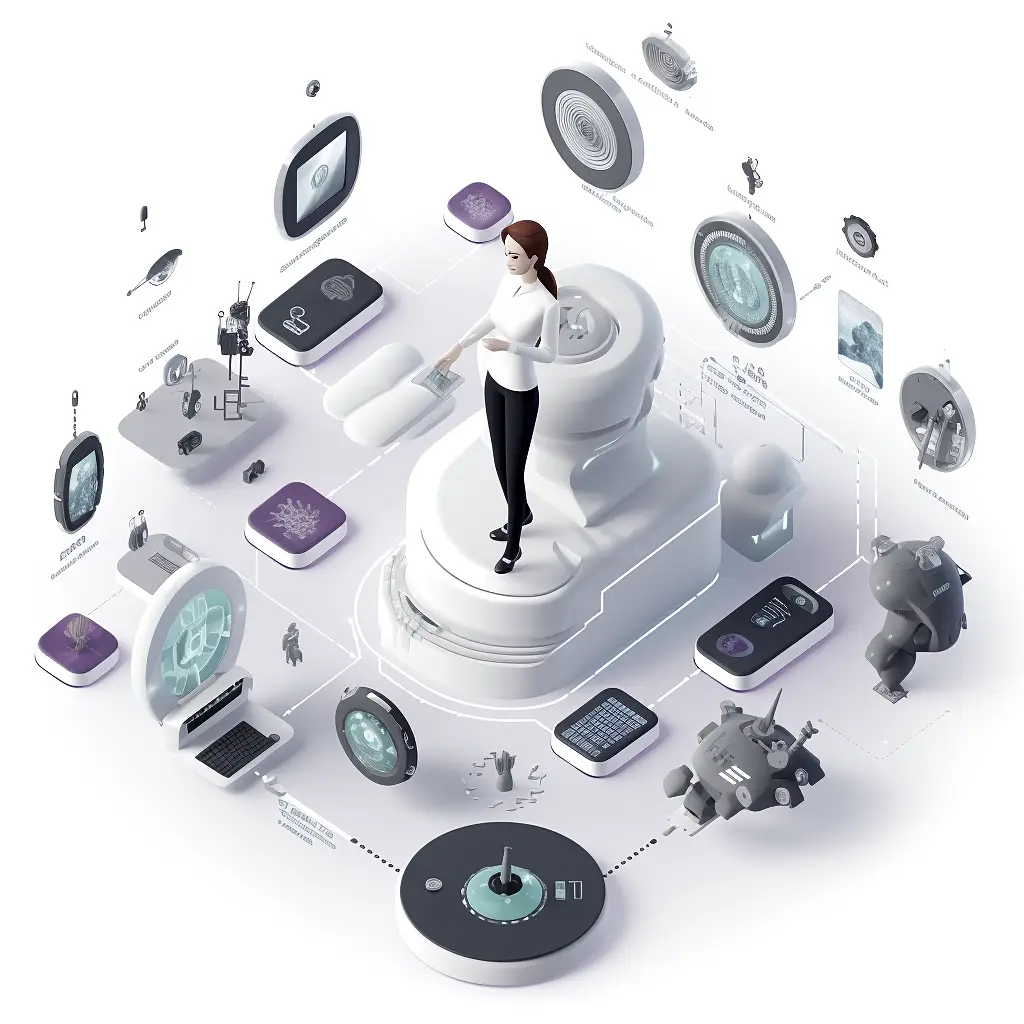
AI’s role in product design, particularly in healthcare and medtech, is multifaceted.
One of its greatest strengths is acting as a knowledge resource, helping designers learn from historical data, identify patterns, and avoid repeating past mistakes.
AI can support every stage of product development, including:
- User interface (UI) design
- User experience (UX) design
- Physical product development
- Branding and communication strategy
Despite these capabilities, the human perspective remains essential. Empathy, ergonomics, intuition, and contextual understanding continue to be qualities that AI cannot fully replicate, especially when designing products that directly impact people’s lives.
AI in Healthcare and Medtech
“Navigating Micro-AI, designers focus on creating systems that adapt to unique company demands, turning AI into a strategic partner.”

Healthcare is one of the industries where AI has the potential to create the greatest impact.
Its ability to process massive amounts of medical information allows clinicians and designers to uncover insights that would otherwise be difficult or impossible to detect.
For example, AI can:
- Analyze medical images with remarkable speed and accuracy
- Assist physicians in diagnosing diseases earlier
- Personalize treatment plans using patient history and genetic information
- Support the development of smarter medical devices
These capabilities represent a significant advancement in healthcare innovation, enabling more effective treatments while improving patient outcomes.
Potential Benefits of AI in Healthcare

The advantages of AI extend well beyond faster computation.
By helping healthcare professionals diagnose diseases earlier and more accurately, AI has the potential to improve patient outcomes while reducing unnecessary treatments and delays.
AI-driven healthcare systems can also:
- Optimize resource allocation
- Reduce patient wait times
- Improve operational efficiency
- Enhance the overall patient experience
When implemented thoughtfully, AI allows healthcare providers to spend less time managing information and more time caring for patients.
Ethical Considerations and Challenges

Like every transformative technology, AI introduces important ethical questions.
Healthcare organizations must carefully consider issues including:
- Patient privacy
- Data security
- Algorithmic bias
- Transparency
- Accountability
Building trust requires AI systems that are understandable, responsible, and designed with human well-being at the center.
Equally important is recognizing that AI should complement, not replace, the expertise of healthcare professionals. Compassion, judgment, and human connection remain indispensable components of exceptional healthcare.
Looking to the Future
The future of AI in healthcare and medtech is incredibly promising, but realizing that promise requires thoughtful collaboration.
As AI technology continues to mature, its integration into healthcare and product design will become increasingly seamless.
Success will depend on partnerships between:
- AI developers
- Designers
- Healthcare professionals
- Patients
Working together, these groups can create technologies that are not only intelligent, but also deeply human-centered.
Artificial intelligence holds enormous potential to improve diagnostics, personalize treatment, optimize healthcare systems, and accelerate medical innovation. When paired with human expertise and responsible design principles, AI becomes more than a technological advancement, it becomes a powerful tool for improving lives.
By embracing AI as an extension of human creativity and decision-making, we can build a future where technology enhances healthcare while always keeping people at the center.