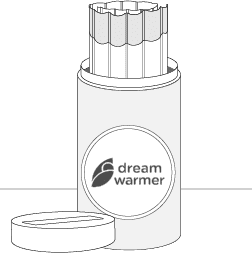
DreamWarmer – Mike Elam’s infant baby warmer is already saving lives

Picture of Ravi Sawhney

Ravi Sawhney

Founder, and CEO RKS Design

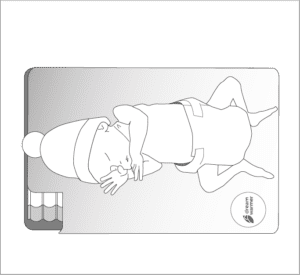
The DreamWarmer™ is an easy-to-use, inexpensive, reusable, and washable non-electric infant warmer that is being studied in clinical trials in Rwanda by Boston Children’s Hospital to help reduce infant mortality in the developing world. Now Director of Product Development at RKS Design, Mike Elam led a team of scientists and engineers at Lawrence Berkeley National Laboratories to develop the mat. Once heated, it holds a constant temperature for up to six hours, using a low-tech and completely harmless phase-changing wax.
The Problem

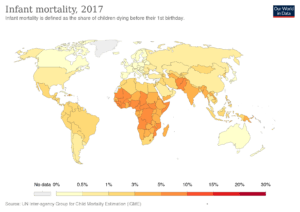
The DreamWarmer solves a pressing and complicated issue in the developing world. In low- and middle-income countries, hypothermia contributes to about one million infant deaths per year. Newborn babies, especially babies who are low birth weight or preterm or both, tend to cool to their environment’s temperature. Therefore, even in warm climates like that of sub-Saharan Africa, newborns can become dangerously cold. While it’s rare for hypothermia to be the primary cause of death, hypothermia in newborns can contribute to respiratory problems, glucose regulation, immune system function, and, most importantly growth, including brain growth, and therefore neuro-developmental outcome. This stunting of neuro-developmental growth can perpetuate the cycle of poverty.

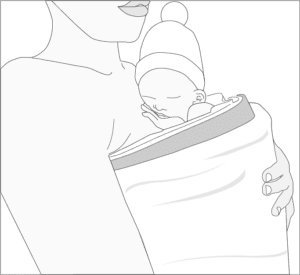
One solution to this immense problem has been Kangaroo Mother Care (KMC). KMC is a body warming technique recommended by the World Health Organization that uses body heat from the caregiver’s chest to keep the baby warm. But KMC is not always feasible, for example, in settings where an infant needs medical care such as resuscitation or clinical instability. KMC is not available when caregivers need to do domestic chores, work, or tend to other family members.

In developed countries that can afford them, electric warmers are the standard of care, but they are costly and require training to reduce the risk of causing both hypo and hyperthermia. Poor maintenance can significantly reduce their lifespan, increasing their cost. Furthermore, electric heaters require electricity sources, which aren’t always available in developing countries.

The Solution

Mike Elam director of product development at RKS design consultancy

Mike and his team set out to design a warmer that would both complement KMC and enhance it. This use case also demanded heavy constraints: the blanket needed to be used without electricity, inexpensive, intuitive to use, requiring minimal training, easily washed, and reused with a goal of a thousand cycles.

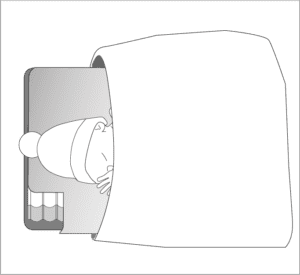
The team modeled the design of DreamWarmer after a heating pad. Unlike a traditional heating pad, which uses water, the DreamWarmer uses a wax mattress. The wax mattress is composed of cylindrical “candles” designed to become liquid at skin temperature. This phase change material (PCM)is a precise mixture of non-toxic vegetable oils that change from solid to liquid at 37°C. Once heated, the wax mattress slides into an insulating sleeve constructed with a sturdy neoprene material that requires no attached fabric, can be easily cleaned and reused, and provides comfort and insulation to maximize the duration of heat transfer.

The product had to be scalable both in manufacturing and reach, which required Mike and his team to innovate at every level. “We had to develop a unique approach to filling our candle membrane with the phase change wax and make it a process that could be replicated simply at a local level, with minimal capital investment. It was a dimension of the design process that was absolutely critical to achieving maximum adoption by driving the cost of a unit as low as possible while supporting community economies through local manufacturing.”

How it works

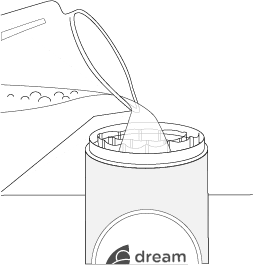
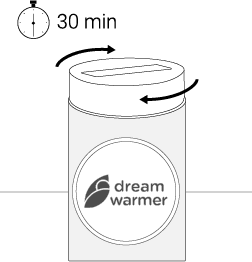
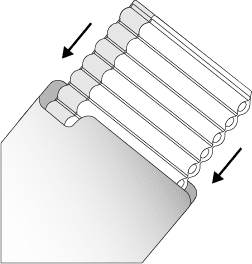
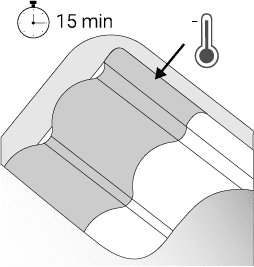
The DreamWarmer had to be very easy to use and work in a variety of environments. While most communities in the developing world do not have reliable electricity, they have reliable sources of hot water typically used to drink, cook with, and bathe. As a result, Mike and his team designed it to work around hot water in six steps: 1) A caregiver boils water 2) they roll the warmer up and put it in the thermos 3) they fill the thermos with the heated water 4) they wait until the wax is completely melted about 30 minutes 5) they slide the warmer into the neoprene pad and 6) they wait 15 minutes for the mat to cool to the right temperature.

. . . .


What’s next?

The DreamWarmer is already saving lives. After being successfully studied in two pilot studies at four health centers in Rwanda, the DreamWarmer is now undergoing studies in ten hospitals in even more communities. In this new study, Boston Children’s Hospital is assessing the safety and efficacy of the DreamWarmer as an addition and enhancement to KMC. Mike Elam has been following his work closely, “there’s nothing more rewarding than applying the design process and achieving a result like this, a product that will save thousands of infants’ lives, with low enough manufacturing costs to make it accessible to even the poorest communities.” Should the trial prove successful, the DreamWarmer will see an even greater rollout across the Continent, as it continues to save lives.


Want to learn more?

Want to learn even more?

https://patentimages.storage.googleapis.com/d1/7a/39/a304db05210307/USD773681.pdf

https://www.globalnewborn.org/our-technology/

https://clinicaltrials.gov/ct2/show/NCT03890211

https://www.ncbi.nlm.nih.gov/pmc/articles/PMC6361488/

https://www.smartpatients.com/trials/NCT03031431

http://www.puretemp.com/pcmatters/pcm-equipped-infant-warming-mat-set-for-large-scale-trial-in-rwanda

more Thoughts & ideas

A collage shows people working on tactile art projects at the Holiday Ornament Workshop and a busy indoor event. In the center are the Momentum Innovative Disability Services logo and a red triangle in a circle, separated by an “x” symbol.

Creating Together

Our Holiday workshop at momentum Creating as a community To kick off the holiday season, we partnered with our new neighbors at Momentum, a nonprofit that has

A close-up of a futuristic circuit board with glowing lights, overlaid with the text: Designing the Future of Hard Tech. Insights from LA Tech Week 2025. Tech LA Week and a red logo appear in the corners.

Insights from LA Tech Week 2025

Designing the Future of HardTech Insights from LA Tech Week 2025 insights from la tech week hardtech panel Building, Scaling, & Funding HardTech Panel insights from RKS

A person interacts with a futuristic digital interface showing circular graphics. Text reads: “What We Learned from SoCalBio 2025: How AI Earns Its Place in Healthcare.” SoCalBio and another life sciences logo are visible.

What We Learned from SoCalBio 2025

How AI Earns ItsPlace in Healthcare What We Learned from SoCal Bio 2025 What we learned from socalbio 2025 How AI Earns Its Place in Healthcare Panel

About-RKS Product Design

About RKS

RKS is a design and innovation firm that creates solutions for clients that are relevant to the market, build the brand and create emotional connection. RKS services the full range of companies from funded startups to multinational corporations. Founder Ravi K. Sawhney cultivated a people-centric approach modeled from his work at Xerox PARC in the 1970’s, where innovative methods using psychology as an essential factor in design resulted in the first-generation touch screen graphic interface as well as many other breakthroughs. RKS came to national attention shortly after its founding by developing the production design of the animated Teddy Ruxpin, one of the greatest disruptive success stories in the history of the toy industry. Success followed success, with RKS being in on the ground floor of tablets with Alan Kay, Pocket Arcades with Sega and the game-changing dental whitening system for Discus Dental. Another milestone was the turnaround of MiniMed, developing a discreet personal insulin pump that allowed millions of diabetics to shed the stigma of being seen as “sick.” This inspired design took MiniMed from a declining $40M in revenue to $270M in three years, leading to its acquisition by Medtronic for $3.6B. The 1990’s brought a confluence of deep introspection and humanity, along with insights into how the work of Joseph Campbell and Abraham Maslow could inform design. This direction led to RKS Design’s highly acclaimed Psycho-Aesthetics methodology.
RKS Design Logo Product Design
DreamWarmer Infant warmer with baby sleeping on it

DreamWarmer – Mike Elam’s infant baby warmer is already saving lives

Picture of Ravi Sawhney

Ravi Sawhney

Founder, and CEO RKS Design

The DreamWarmer™ is an easy-to-use, inexpensive, reusable, and washable non-electric infant warmer that is being studied in clinical trials in Rwanda by Boston Children’s Hospital to help reduce infant mortality in the developing world. Now Director of Product Development at RKS Design, Mike Elam led a team of scientists and engineers at Lawrence Berkeley National Laboratories to develop the mat. Once heated, it holds a constant temperature for up to six hours, using a low-tech and completely harmless phase-changing wax.
The Problem

The DreamWarmer solves a pressing and complicated issue in the developing world. In low- and middle-income countries, hypothermia contributes to about one million infant deaths per year. Newborn babies, especially babies who are low birth weight or preterm or both, tend to cool to their environment’s temperature. Therefore, even in warm climates like that of sub-Saharan Africa, newborns can become dangerously cold. While it’s rare for hypothermia to be the primary cause of death, hypothermia in newborns can contribute to respiratory problems, glucose regulation, immune system function, and, most importantly growth, including brain growth, and therefore neuro-developmental outcome. This stunting of neuro-developmental growth can perpetuate the cycle of poverty.

One solution to this immense problem has been Kangaroo Mother Care (KMC). KMC is a body warming technique recommended by the World Health Organization that uses body heat from the caregiver’s chest to keep the baby warm. But KMC is not always feasible, for example, in settings where an infant needs medical care such as resuscitation or clinical instability. KMC is not available when caregivers need to do domestic chores, work, or tend to other family members.

In developed countries that can afford them, electric warmers are the standard of care, but they are costly and require training to reduce the risk of causing both hypo and hyperthermia. Poor maintenance can significantly reduce their lifespan, increasing their cost. Furthermore, electric heaters require electricity sources, which aren’t always available in developing countries.
The Solution
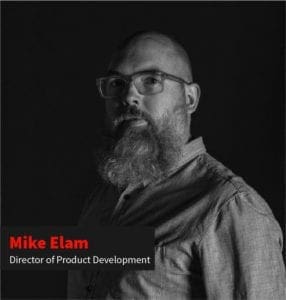
Mike Elam director of product development at RKS design consultancy

Mike and his team set out to design a warmer that would both complement KMC and enhance it. This use case also demanded heavy constraints: the blanket needed to be used without electricity, inexpensive, intuitive to use, requiring minimal training, easily washed, and reused with a goal of a thousand cycles.

The team modeled the design of DreamWarmer after a heating pad. Unlike a traditional heating pad, which uses water, the DreamWarmer uses a wax mattress. The wax mattress is composed of cylindrical “candles” designed to become liquid at skin temperature. This phase change material (PCM)is a precise mixture of non-toxic vegetable oils that change from solid to liquid at 37°C. Once heated, the wax mattress slides into an insulating sleeve constructed with a sturdy neoprene material that requires no attached fabric, can be easily cleaned and reused, and provides comfort and insulation to maximize the duration of heat transfer.

The product had to be scalable both in manufacturing and reach, which required Mike and his team to innovate at every level. “We had to develop a unique approach to filling our candle membrane with the phase change wax and make it a process that could be replicated simply at a local level, with minimal capital investment. It was a dimension of the design process that was absolutely critical to achieving maximum adoption by driving the cost of a unit as low as possible while supporting community economies through local manufacturing.”

How it works

The DreamWarmer had to be very easy to use and work in a variety of environments. While most communities in the developing world do not have reliable electricity, they have reliable sources of hot water typically used to drink, cook with, and bathe. As a result, Mike and his team designed it to work around hot water in six steps: 1) A caregiver boils water 2) they roll the warmer up and put it in the thermos 3) they fill the thermos with the heated water 4) they wait until the wax is completely melted about 30 minutes 5) they slide the warmer into the neoprene pad and 6) they wait 15 minutes for the mat to cool to the right temperature.

. . . .


What’s next?

The DreamWarmer is already saving lives. After being successfully studied in two pilot studies at four health centers in Rwanda, the DreamWarmer is now undergoing studies in ten hospitals in even more communities. In this new study, Boston Children’s Hospital is assessing the safety and efficacy of the DreamWarmer as an addition and enhancement to KMC. Mike Elam has been following his work closely, “there’s nothing more rewarding than applying the design process and achieving a result like this, a product that will save thousands of infants’ lives, with low enough manufacturing costs to make it accessible to even the poorest communities.” Should the trial prove successful, the DreamWarmer will see an even greater rollout across the Continent, as it continues to save lives.


Want to learn more?

Want to learn even more?

https://patentimages.storage.googleapis.com/d1/7a/39/a304db05210307/USD773681.pdf

https://www.globalnewborn.org/our-technology/

https://clinicaltrials.gov/ct2/show/NCT03890211

https://www.ncbi.nlm.nih.gov/pmc/articles/PMC6361488/

https://www.smartpatients.com/trials/NCT03031431

http://www.puretemp.com/pcmatters/pcm-equipped-infant-warming-mat-set-for-large-scale-trial-in-rwanda

more thoughts and ideas

About-RKS Product Design

About RKS

RKS is a design and innovation firm that creates solutions for clients that are relevant to the market, build the brand and create emotional connection.

RKS services the full range of companies from funded startups to multinational corporations. Founder Ravi K. Sawhney cultivated a people-centric approach modeled from his work at Xerox PARC in the 1970’s, where innovative methods using psychology as an essential factor in design resulted in the first-generation touch screen graphic interface as well as many other breakthroughs.
RKS came to national attention shortly after its founding by developing the production design of the animated Teddy Ruxpin, one of the greatest disruptive success stories in the history of the toy industry. Success followed success, with RKS being in on the ground floor of tablets with Alan Kay, Pocket Arcades with Sega and the game-changing dental whitening system for Discus Dental. Another milestone was the turnaround of MiniMed, developing a discreet personal insulin pump that allowed millions of diabetics to shed the stigma of being seen as “sick.” This inspired design took MiniMed from a declining $40M in revenue to $270M in three years, leading to its acquisition by Medtronic for $3.6B.

The 1990’s brought a confluence of deep introspection and humanity, along with insights into how the work of Joseph Campbell and Abraham Maslow could inform design. This direction led to RKS Design’s highly acclaimed Psycho-Aesthetics methodology.

RKS Design Logo Product Design

You have signed up for the designer!

Welcome to a world of design and innovation

Your download has started!

If this is not the case, then click the button below to start it