A solid black circle with a white equilateral triangle centered inside it, pointing upward.
Following a recent media feature that included insights from our CEO & Founder, Ravi Sawhney, this perspective expands on the implications of automation in fast food and retail environments. As brands introduce self-service systems to increase efficiency, the underlying value exchange is shifting, with customers taking on more responsibility while expectations continue to rise.

This article explores why efficiency alone does not define a successful experience, how subtle changes in effort and interaction impact perception, and where trust begins to erode. It highlights the importance of designing not just for operational performance, but for human response, where adoption, satisfaction, and long-term value are ultimately determined.

When Automation Breaks the Experience: The Hidden Risk of Self-Service Design

The Shift Customers Feel Immediately

Automation isn’t the issue.

The issue is how it changes the experience.

A recent article featuring Ravi Sawhney highlighted a growing shift in fast food: customers are being asked to do more, while paying more.

At first glance, automation promises efficiency. Faster ordering. Shorter lines. Lower operational costs.

But that’s not how people evaluate experiences.

They evaluate value.

As Ravi noted, “What’s changing here is the value exchange. Customers are doing more of the work while paying more. People feel that immediately.”

The Shift Most Companies Miss

Most automation strategies are built around optimization, focusing on speed, throughput, and cost reduction. These are measurable and easy to justify from a business perspective, but they are not how customers actually experience a system.

Customers are not thinking about operational efficiency or evaluating labor models. Instead, they are asking a much simpler question:

Does this feel worth it?

That judgment is not analytical; it is instinctive. It is formed quickly based on how much effort is required, how clear the process feels, and how the interaction makes them feel overall.

When customers are asked to navigate more steps, make more decisions, or take on tasks that were previously handled for them, their perception of value begins to shift. This can happen even if the system is technically faster or more efficient.

Effort is not neutral. People feel it, and they factor it into how they evaluate an experience.

When effort increases without a corresponding increase in perceived value, something begins to break. Not at an operational level, but at an emotional one. That is where friction builds and trust starts to erode.

When Convenience Stops Feeling Convenient

There is a point where convenience crosses a line.

What once felt simple and intuitive begins to require more attention and effort. Ordering becomes navigating through screens and options. Speed becomes dependent on self-service. Ease shifts into responsibility.

Individually, these changes may seem minor. Together, they reshape how the experience is perceived.

At that point, the interaction no longer feels like a benefit. It starts to feel like work.

As Ravi explained, “At a certain point, convenience stops feeling convenient and starts feeling like responsibility.”

That shift is subtle, but it is critical. It marks the moment when customers begin to reassess the value of the experience, not based on efficiency, but on how it feels to engage with it.

This is where trust begins to erode, often without companies realizing it is happening.

Automation Without Meaning

Automation can make experiences faster, but speed alone does not determine whether an experience is better.

In some cases, automation removes the very elements that made the experience work in the first place. While those elements may seem small or inefficient from an operational perspective, they often carry meaning for the customer.

Human interaction is not just functional. It signals attention, care, and a sense of being understood. Even brief moments of interaction can reinforce trust and create a feeling of value that extends beyond the transaction itself.

When that layer is removed, something needs to replace it. The experience must still communicate clarity, ease, and a sense of consideration for the user.

If nothing replaces it, the interaction can begin to feel impersonal or incomplete. Even if it is technically faster, the experience lacks meaning, and efficiency alone is not enough to compensate for that loss.

The Real Design Challenge

The question is not whether to automate. Automation will continue to expand across industries, driven by efficiency, scale, and technological capability.

The real question is what is being replaced, and what is being added back.

Every element that is removed from an experience, whether it is human interaction, guidance, or a sense of ease, carries meaning for the customer. If that meaning is not intentionally replaced, the overall experience begins to degrade, even if the system itself is more advanced.

Companies that succeed will not be the ones that automate the most. They will be the ones that understand how the experience feels from the customer’s perspective and design accordingly.

Because adoption is not driven by capability alone. It is driven by perception, trust, and whether the experience feels valuable in the moment it is used.

Ready to Partner with Us?

RKS Designer Josh Probst returned from Paris after receiving the Paris Design Award. Josh was honored as the best emerging designer of 2020 for his electrical motorcycle design, MAYA. This prestigious award is given annually in Paris to the best new designers in the world. As the 2020 emerging designer of the year, Josh won while he was a senior at college. Due to COVID the 2020 awards show was postponed till December 2021.

About the Paris Design Award

The Paris Design Award was started for designers by designers. The awards are organized annually by Farmani Group – a global leader in the curation and promotion of architecture, design, and photography, alongside In Between – a Paris-based collective of thinkers and makers.

Awardees come from over 70 countries, and the awards honor achievements across the categories of Architecture, Landscape, Interior, Product, and Graphic Design, falling into either ‘Professional’ or ‘Emerging’ sections – with the latter dedicated to exemplary student projects. The jury includes creatives, editors, and famous designers such as Maurizio Cattelan, Pierpaolo Ferrari, Suchi Reddy, Fernanda Marques, Yoko Choy, and Amit Gupta, among many others.
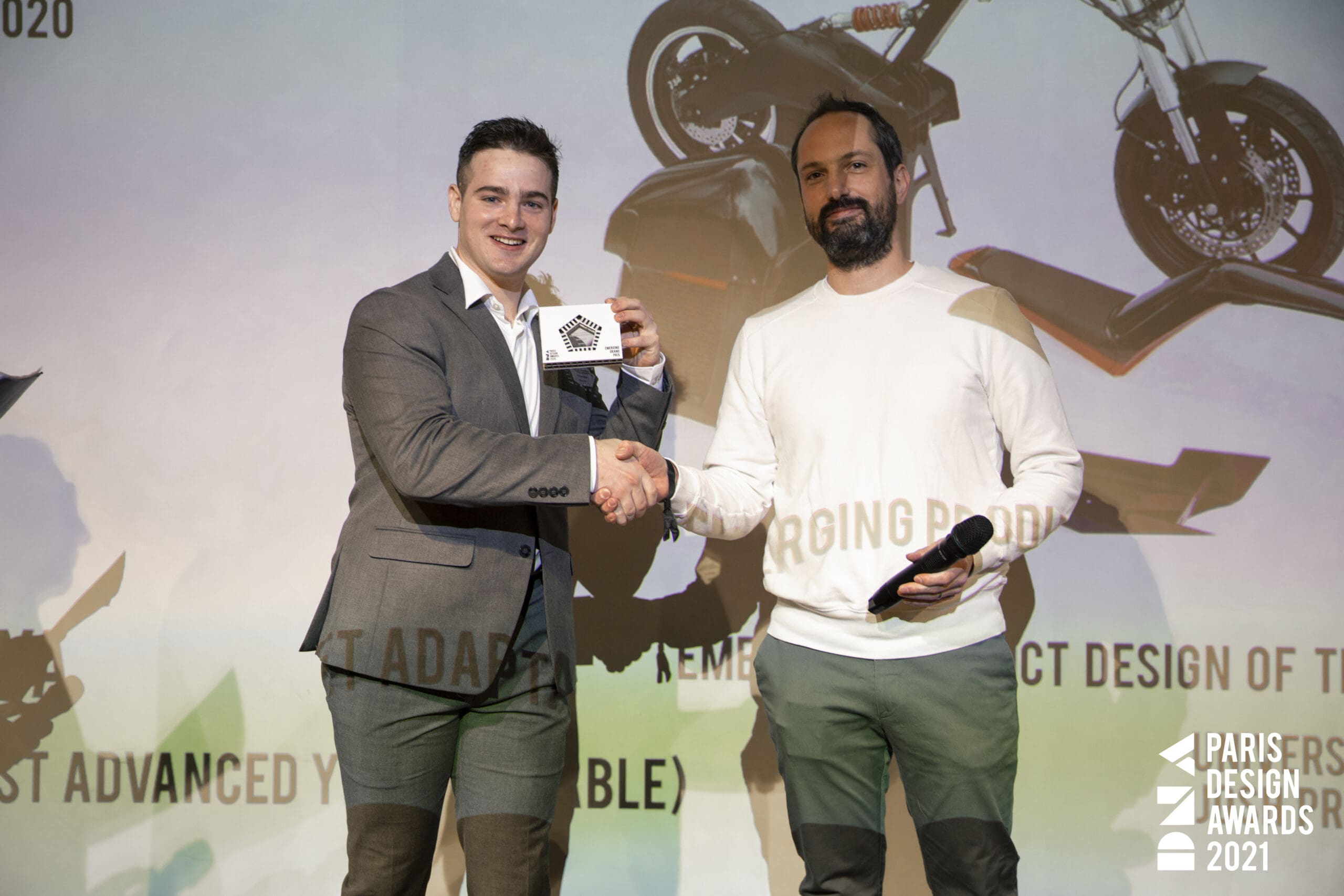
Two men shake hands during an award presentation.

Winning the Award

Josh won the Paris Design Award in 2020 when he graduated college but was unable to attend due to the new COVID pandemic. At the time he found out he was a winner he was also searching for jobs in one of the hardest job markets in the recent past. The award, and notoriety that came along with it, helped raise his profile to RKS principal Ravi Sawhney.

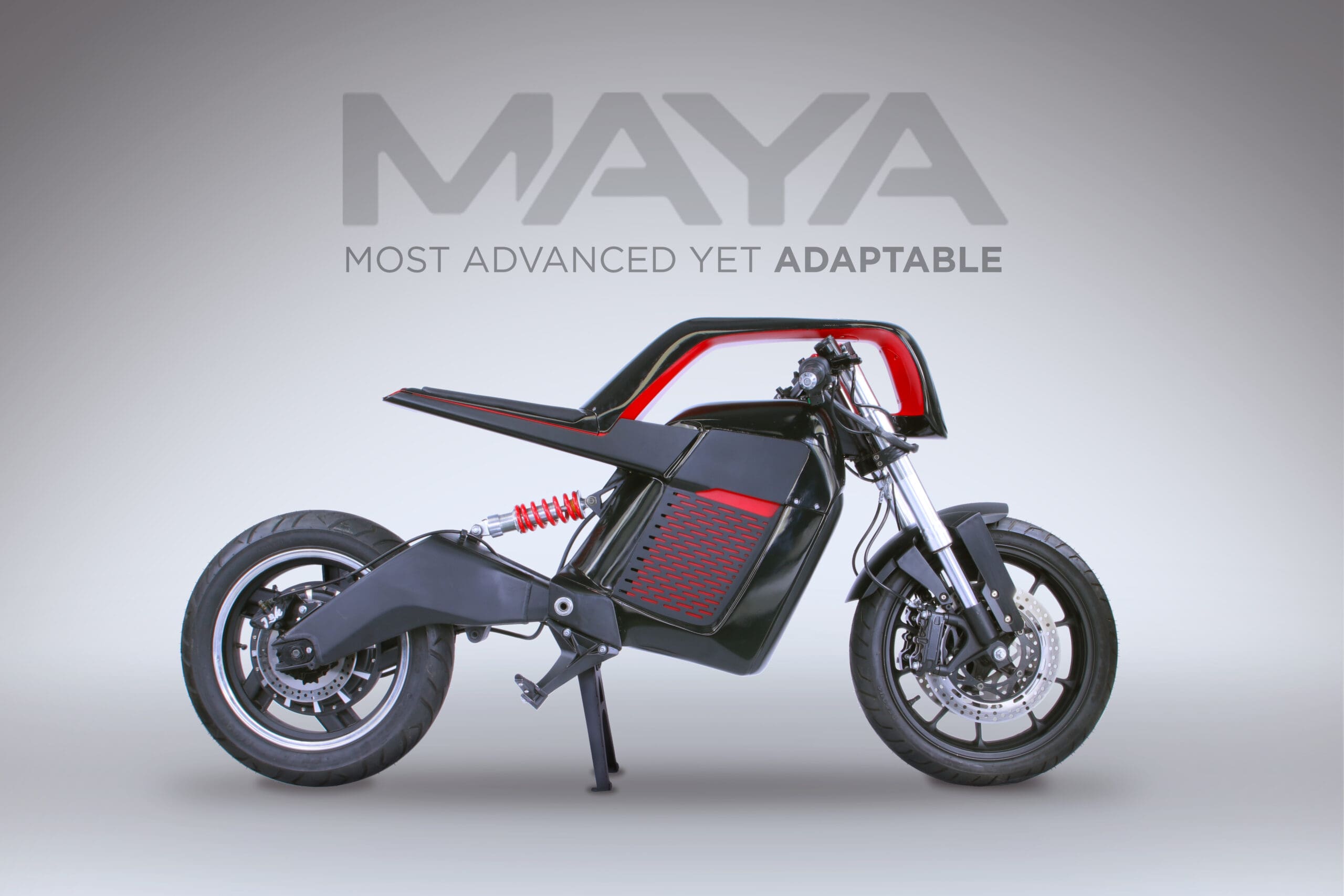
MAYA appealed to the judges, in part, because of its audacity. During his last semester of school, Josh designed and built a fully functional modular motorcycle. While not street legal, the motorcycle is fully rideable and sets out a new vision for motorcycles that can be upgraded by component. Being upgraded by component, the motorcycle can in theory last forever.

The Bike

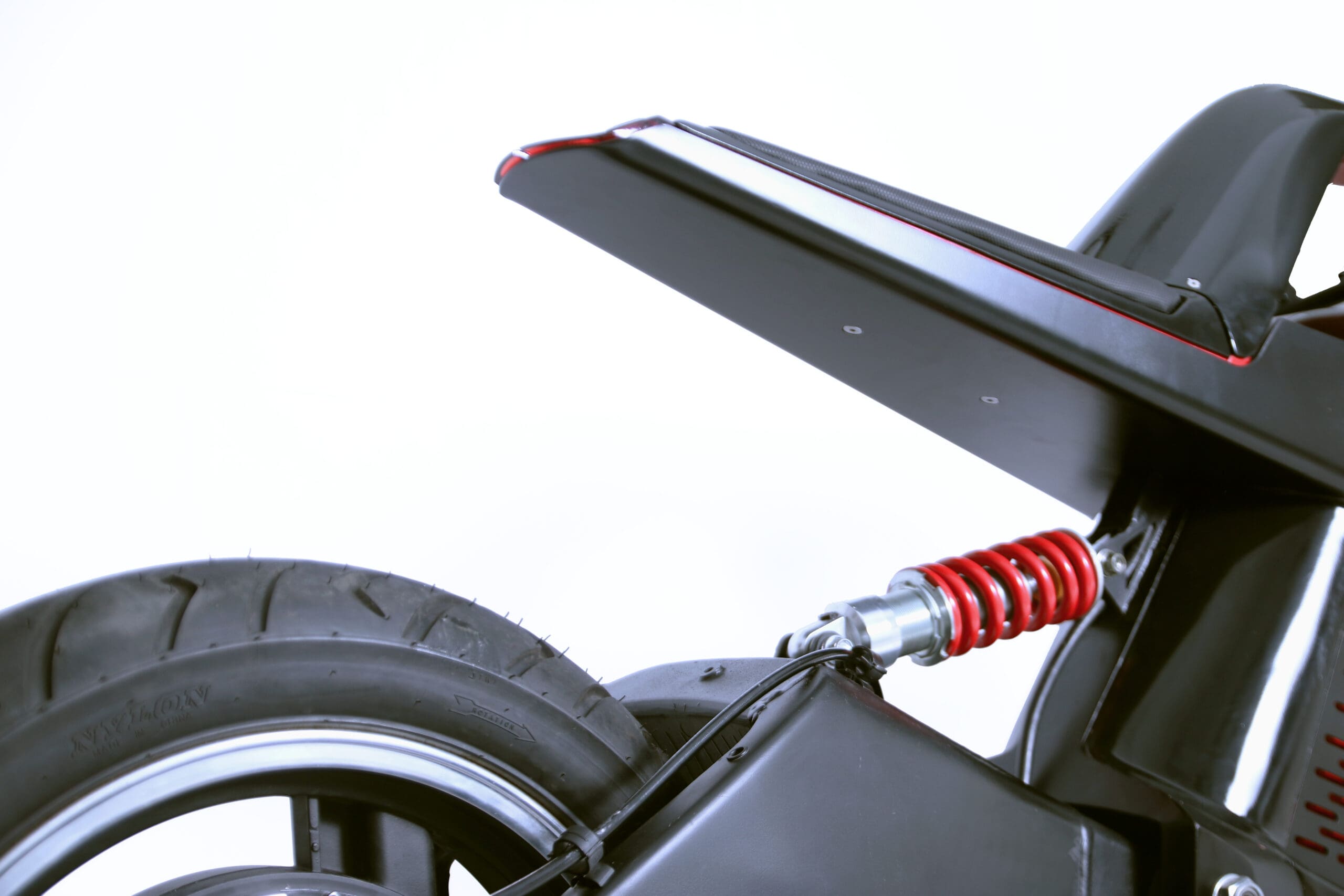
MAYA breaks into four major components that are quickly and easily disassembled and assembled making automotive upgrades easy and approachable. Using the single frame, the battery, seat, aesthetics, and powertrain are all changeable and upgradable. In addition to being user-friendly, the bike is eminently sustainable, allowing old parts to be recycled and upgraded without the need to scrap the entire bike.
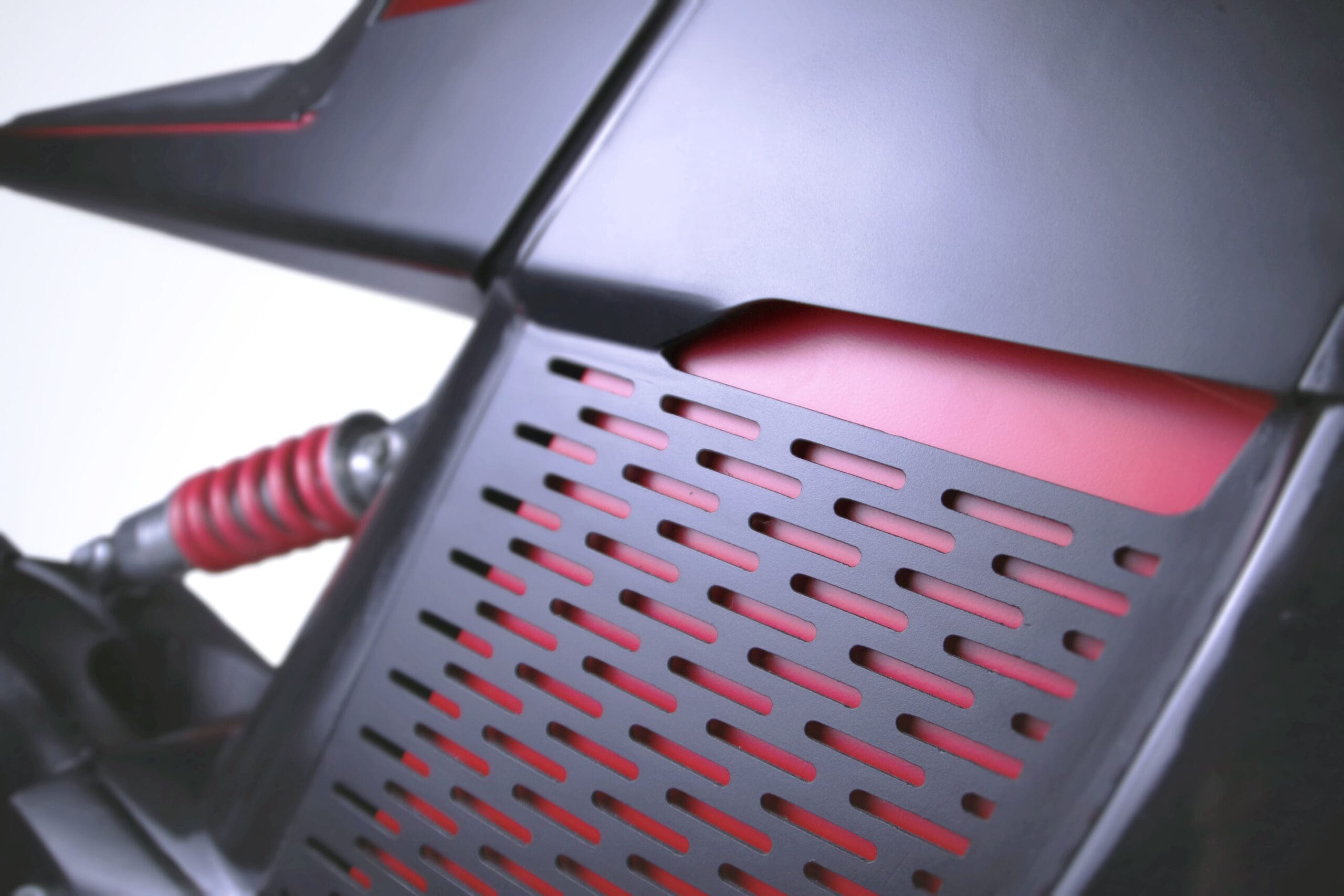
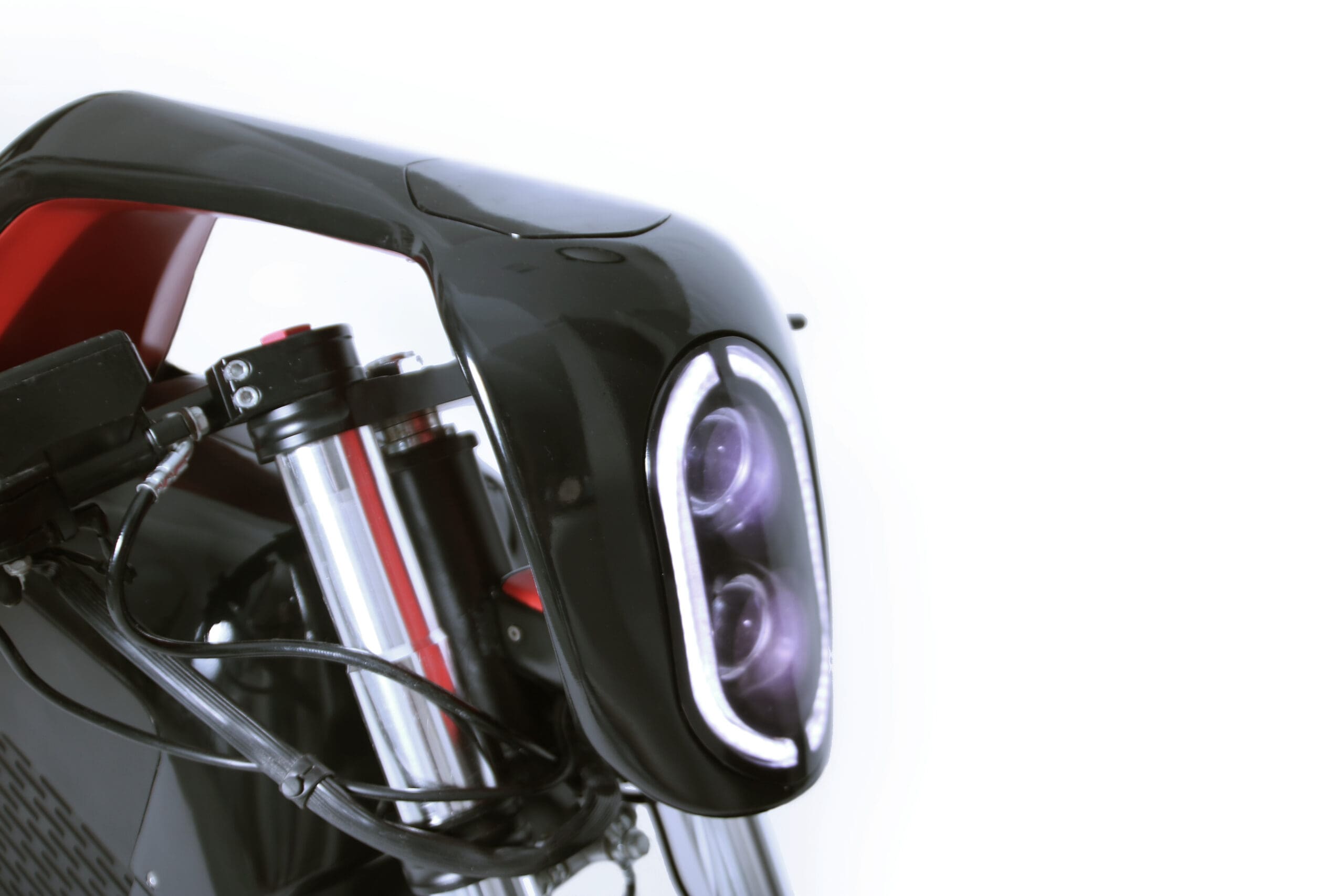
Close-up of a black and red futuristic vehicle or motorcycle, showcasing a vented…

Close-up of a modern motorcycles front end, featuring a sleek black fairing and… Close-up of the rear wheel, shock absorber with a red spring, and angular tail section… A futuristic black and red electric motorcycle stands on display with the words…

What’s next for MAYA?

After his big win Josh will showcase his design at motorcycle shows around the globe, including the Handbuilt Motorcycle Show, Mama Tride Motorcycle Show, and the Bike Shed Motorcycle Show (London). He’s also working on a new motorcycle. Asking the question, “What will the motorcycle look like when the combustion engine becomes obsolete”, he is again looking at the future.

According to Josh, the motorcycle hasn’t changed since the Traub motorcycle of 1916. As the engine powering the bike becomes obsolete, so will the design. Whereas motorcycles were built around the combustion engine, which has also remained relatively static, now motorcycles will be built around battery packs that come in all shapes and sizes. So what will the last motorcycles built with a combustion engine look like? Once Josh is done, we’ll soon find out.

Spending his weekends working with CNC, 3D printing, and other heavy-duty and game-changing prototyping tools Josh is one his way.

About Josh Probst

Born and raised in Houston, Texas, Josh Probst has always had an affinity towards Design and building. This passion led to him building his first motorcycle in his parent’s garage while in high school. This 1978 Honda CB 125s called the retro rocket not only got him the opportunity to be the youngest builder invited to the handbuilt motorcycle show in Austin, Texas but also got him into the University of Houston Industrial design program. The four-year program honed his skills and challenged him to broaden his perspective to a more empathetic design approach. Graduating with honors in the class of 2019 he accumulated several awards and experiences. Including 2019 IDEA finalist, and was invited to display and be a keynote speaker at Kookmin university’s Wearable tech Exhibit for his air pollution mask called 2.5. As well as receiving the 2020 Paris Design Awards Emerging product designer of the year, 2020 core 77 design award, and was invited to display and be a keynote speaker to the Harvard Business school club of Houston for his Fully functional modular electric motorcycle thesis called MAYA.

You have signed up for the designer!

Welcome to a world of design and innovation

Your download has started!

If this is not the case, then click the button below to start it