Field Notes
What to Look for in a Product Design Firm: A Buyer’s Guide
The right firm doesn’t just improve your product: it can define your market position. The wrong firm costs you time, money, and market opportunity. A practical framework for evaluating your options.


Choosing a product design firm is one of the highest-stakes decisions a company can make. The right firm doesn’t just improve your product, it can define your market position, accelerate your path to launch, and create competitive advantages that are genuinely difficult to replicate. The wrong firm costs you time, money, and market opportunity. This guide gives you a practical framework for evaluating your options and making a decision you won’t regret.
The challenge is that many product design firms appear similar at first glance. Most showcase polished portfolios, list comparable capabilities, and promise innovation. What matters is what lies beneath those surface-level similarities: the firm’s process, strategic thinking, industry experience, and ability to uncover insights that competitors miss. The best design partners do more than execute requirements, they help shape the right product strategy from the start, reducing risk and increasing the likelihood that what you bring to market is something people genuinely want, adopt, and advocate for.
What to Look for In A Product Design Firm: How to Choose the Right Partner
- Type
- RKS Design Perspective
- Date
- June 8th, 2026

Start with the Right Questions
Before you evaluate any firm, get clear on what you actually need. The answers to these questions will shape every other part of your evaluation:
Are you seeking strategic design leadership, or execution support for a defined concept? Do you need industrial design only, or integrated engineering as well? What does success look like, a product that wins awards, one that achieves regulatory clearance, one that hits a price point, or all three? What is your timeline, and how flexible is it? What internal capabilities do you have, and what gaps are you counting on the firm to fill?
Firms that are excellent at one thing may be mediocre at another. Being clear about your priorities before you start conversations will help you ask better questions and evaluate answers more accurately.
What to Look For:
1. A defined methodology, not just a portfolio
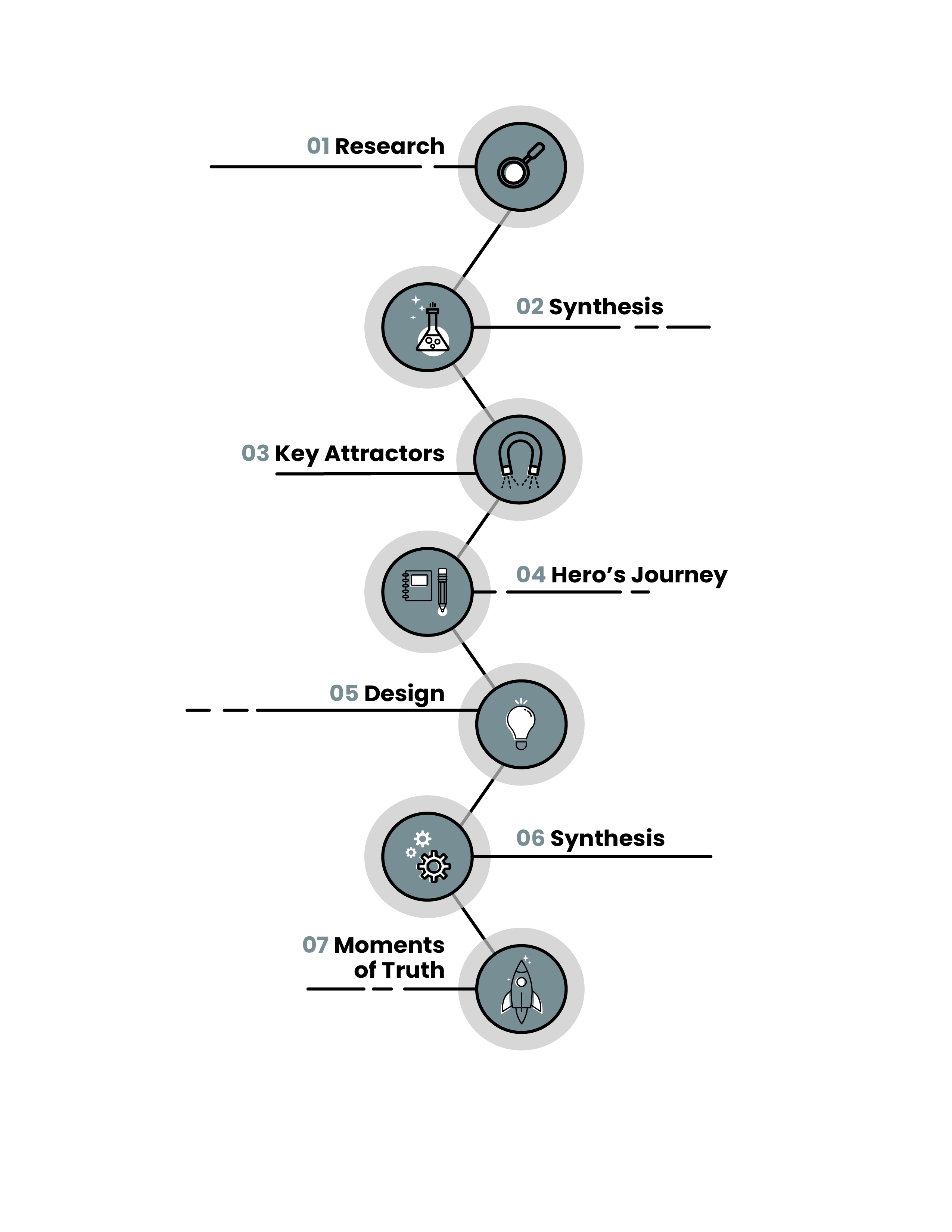
Any firm can show you beautiful products. Fewer can explain why those products are beautiful, and what process reliably produces that outcome. Ask every candidate to walk you through their design process. You’re looking for a coherent point of view on how user insight translates into design decisions, not a list of services or a generic “empathize, define, ideate” framework.
At RKS, our methodology is Psycho-Aesthetics®, a framework for understanding the emotional landscape of a user population and designing products that connect at that level. It’s not a process for its own sake; it’s a theory of why some products connect with people and others don’t. That kind of methodological depth is what separates firms that produce consistently excellent work from those that produce occasional great work alongside a lot of mediocre work.
2. Category experience, and its limits
Category experience matters. A firm that has designed medical devices understands FDA human factors requirements, design controls, biocompatibility, and the emotional dynamics of clinical use. That knowledge has real value and takes years to develop. When evaluating firms, look for experience in your category or in adjacent ones that share key characteristics, similar regulatory environments, similar user populations, similar technical constraints.
But don’t over-index on category experience. Some of the most innovative products come from applying insights from one category to another. A firm that brings deep consumer electronics sensibility to a medical device can produce something that neither a pure medtech firm nor a pure consumer firm would have created. Cross-category thinking is often where breakthrough happens.
3. Integrated design and engineering
Design and engineering that operate separately produce products that look great in renders and disappoint in manufacturing. The best firms integrate mechanical and electrical engineering with design from the earliest concept phases, not as a handoff after the “creative” work is done, but as a continuous collaboration that ensures beautiful ideas are also buildable ones. Ask specifically how design and engineering interact at each stage of the firm’s process.
4. User research capabilities
Great product design is grounded in deep user understanding. Ask how the firm conducts user research: do they go into the field? Do they conduct ethnographic observation, or just interviews? How do user insights actually influence design decisions, can they show you examples? Firms that treat user research as a checkbox rather than a genuine inquiry produce products that are designed for an imagined user rather than a real one.
5. Track record on outcomes, not just outputs
Portfolio work tells you what a firm can make. References tell you how they work and whether their products performed in the market. Ask for references from clients with projects similar to yours, in category, scale, and complexity. Ask those references specifically about timeline adherence, communication quality, and what happened when things went wrong (because they always do).

Red Flags to Watch For
Vague process descriptions. If a firm can’t explain how they make decisions, they’re probably making them intuitively, which means inconsistently.
No engineering integration. Pure design studios that hand off to separate engineering teams create avoidable handoff problems and cost you time and money.
Portfolio without business context. Beautiful products that didn’t succeed commercially are evidence of design disconnected from market reality.
Overselling on first contact. Firms that tell you what you want to hear before they understand your problem are optimizing for winning the project, not delivering the outcome.
No interest in your business goals. Design firms that focus only on the brief rather than on your broader commercial objectives will optimize for deliverables rather than outcomes.

The Partnership Mindset
The best firm relationships are long-term partnerships, not one-off transactions. Look for firms that show genuine curiosity about your business, ask questions that go beyond the immediate project, and seem interested in your success over time, not just in completing the engagement. That orientation toward partnership is a reliable predictor of the quality of collaboration you’ll experience throughout the project.
Ready to explore what a partnership with RKS Design looks like? Visit our consumer product design page or contact us to start a conversation.