
Field Notes · Psycho-Aesthetics & HCD
Designing What Humans Really Need: Ravi Sawhney on The Story Engine
Listen to the episode, then read the key ideas from the conversation.
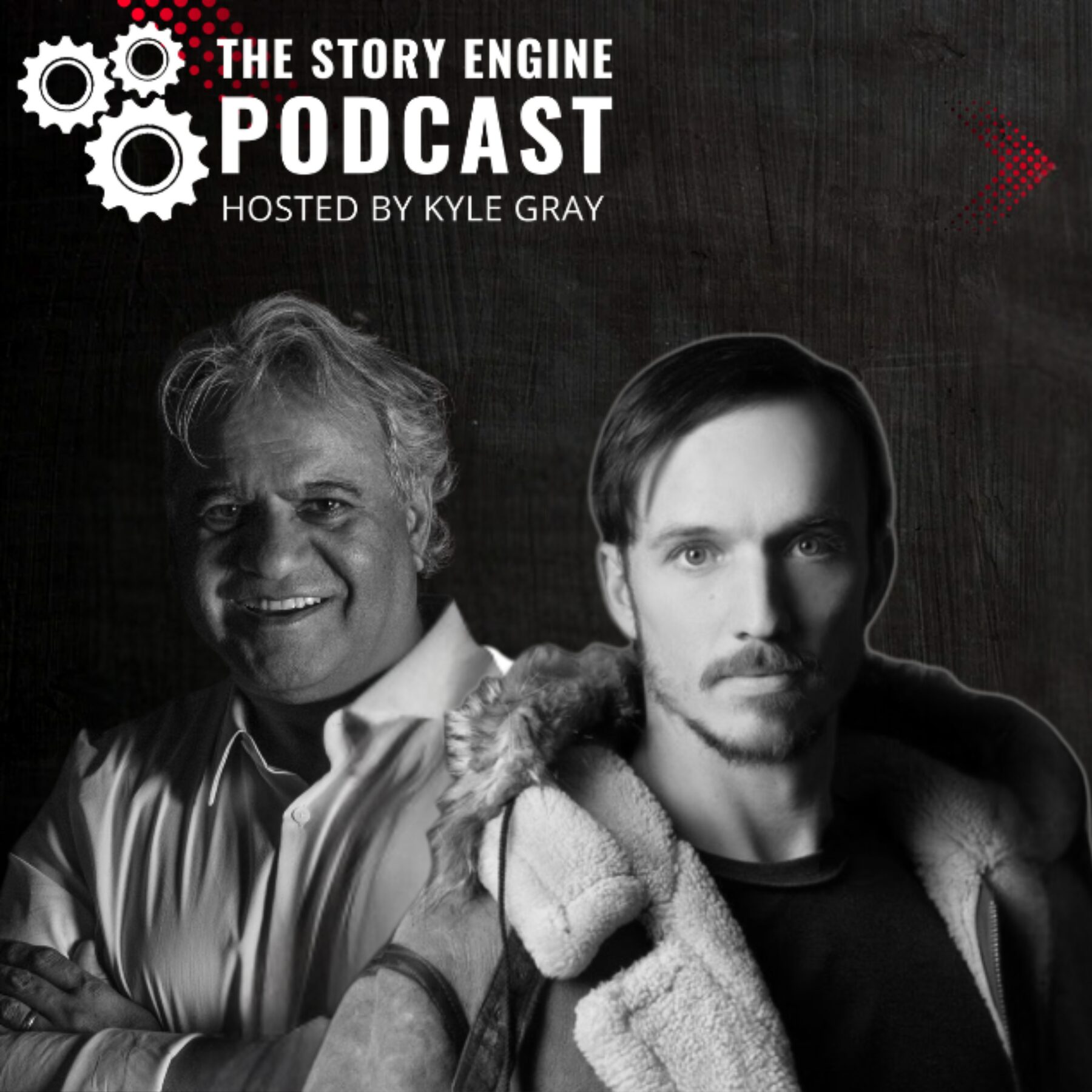
The Story Engine Podcast
Designing What Humans Really Need: The Power of Psycho-Aesthetics
Watch the conversation
RKS Design founder and CEO Ravi Sawhney joined Kyle Gray on The Story Engine Podcast to talk about designing for what people really need. They covered why so much technology feels synthetic, the emotional test we run on everything new, and the stories behind Teddy Ruxpin, RKS Guitars and a home-buying service. Here are the main ideas from the conversation.
Why so much feels synthetic
Kyle opened with a worry many people share: much of today's technology is designed around algorithms and clicks, not people. Ravi agreed. As technology advances, especially AI, things are becoming homogenized. Whether it's music or art, we sense something synthetic, even if we can't put it into words. What's missing is the human element.
A machine can read a face or a body temperature, Ravi said, but design has to predict and project how you are going to make someone feel. People also keep changing. "I will leave this conversation being a different person," he said. Technology can only look at where we are today, or where we were.
Is it like me? Does it like me?
Ravi shared a principle from his close friend and collaborator Dr. Bob Deutsch, who holds doctorates in anthropology and psychology. Whenever something new comes into our world, we run the same quick test:
"Is it like me? Does it like me? Can it make me more?"
That test starts the moment we're born, Ravi said, and our emotions let us filter out the noise and focus on what means something to us. It sits alongside the principle he wrote for RKS in 1982: it's not how you feel about a design or experience, it's how it makes you feel about yourself.
Fear on one side, aspiration on the other
Why do organizations call RKS? Sometimes it's a technology group that needs to understand people well enough to model the future of a market. Sometimes it's a cause, a nonprofit, or even a political candidate who needs messages that resonate. Ravi described two sides of the same equation. One is avoiding pain and fear. The other is aspiration: he didn't buy his last sweater because he was cold, but because it gave him a little affirmation.
At RKS, the hero's journey is a design process: attract, engage, trigger adoption, then create a moment of truth that changes how people feel about themselves, so much that they tell others. Along the way, the team translates pain points into "help me" statements, which moves the work beyond stopping the pain toward getting people to a healthier place. This is the heart of Psycho-Aesthetics® and our ethnographic research.
Finding the deeper meaning
Asked what makes the RKS approach unique, Ravi pointed to its ability to find the deeper meaning in anything. A water bottle isn't just a bottle; it's a way to frame and celebrate the water. For cooking appliances, the team designs to trigger memories of a mother's or grandmother's kitchen, so you can almost smell the cookies, while still delivering something modern. Keep one foot in the past, he said, so people have a point of reference and see something familiar in a fresh way. That idea runs through our home appliance design work.
Teddy Ruxpin and the magic of conceal and reveal
When Ravi declared Psycho-Aesthetics in 1992, some people scoffed and called it psychobabble. He knew from his years at Xerox, working beside 30 PhD psychologists on one of the first touchscreen interfaces, that it's all about people.
Years before, Teddy Ruxpin had proven it. The client brought in a bear with a cassette player inside. Ravi's idea was to hide the technology completely, so it looked like a cuddly teddy bear until it started telling you stories. A store display with a motion detector made the bear open its eyes and say hello as shoppers walked by. Ravi recalls first-year sales near $100 million. The lesson he took away: people love conceal and reveal, something that becomes something else because of an action we take.
A guitar for the music that changed his world
Ravi's proudest moment is RKS Guitars. Instead of relying on rainforest tonewoods, RKS reinvented the electric guitar using cellulose-based plastics made from farm-raised wood pulp. Ravi recalls the guitars being played by artists including members of the Rolling Stones, the Eagles and the Who, along with the late Dave Mason of Traffic. "Music changed my world," Ravi said, and helping make a product that people use to create music is, for him, the most influential thing he has done. It's a story about consumer product design and sustainability at once.
Human-centered services, too
The same method works for services. For Freddie Mac, RKS applied it to the roughly 5,000 down payment assistance programs that loan brokers often didn't know about, and turned them into a tool that helps first-time buyers get into a home. As Ravi put it, if you can raise someone's quality of life, what's that worth? It's the kind of challenge our UI/UX design and software development teams take on.
Resources mentioned
- Psycho-Aesthetics® methodology, with Ravi's books and the Harvard case study
- The story of Teddy Ruxpin
- RKS Guitars
- Freddie Mac DPA One
Want people to feel something real about what you make? Our industrial design and product development teams start with what people need. See the markets we serve or start a conversation.
This episode originally aired on The Story Engine Podcast, hosted by Kyle Gray. Thank you to Kyle for the conversation.