A solid black circle with a white equilateral triangle centered inside it, pointing upward.
Following a recent media feature that included insights from our CEO & Founder, Ravi Sawhney, this perspective expands on the implications of automation in fast food and retail environments. As brands introduce self-service systems to increase efficiency, the underlying value exchange is shifting, with customers taking on more responsibility while expectations continue to rise.

This article explores why efficiency alone does not define a successful experience, how subtle changes in effort and interaction impact perception, and where trust begins to erode. It highlights the importance of designing not just for operational performance, but for human response, where adoption, satisfaction, and long-term value are ultimately determined.

When Automation Breaks the Experience: The Hidden Risk of Self-Service Design

The Shift Customers Feel Immediately

Automation isn’t the issue.

The issue is how it changes the experience.

A recent article featuring Ravi Sawhney highlighted a growing shift in fast food: customers are being asked to do more, while paying more.

At first glance, automation promises efficiency. Faster ordering. Shorter lines. Lower operational costs.

But that’s not how people evaluate experiences.

They evaluate value.

As Ravi noted, “What’s changing here is the value exchange. Customers are doing more of the work while paying more. People feel that immediately.”

The Shift Most Companies Miss

Most automation strategies are built around optimization, focusing on speed, throughput, and cost reduction. These are measurable and easy to justify from a business perspective, but they are not how customers actually experience a system.

Customers are not thinking about operational efficiency or evaluating labor models. Instead, they are asking a much simpler question:

Does this feel worth it?

That judgment is not analytical; it is instinctive. It is formed quickly based on how much effort is required, how clear the process feels, and how the interaction makes them feel overall.

When customers are asked to navigate more steps, make more decisions, or take on tasks that were previously handled for them, their perception of value begins to shift. This can happen even if the system is technically faster or more efficient.

Effort is not neutral. People feel it, and they factor it into how they evaluate an experience.

When effort increases without a corresponding increase in perceived value, something begins to break. Not at an operational level, but at an emotional one. That is where friction builds and trust starts to erode.

When Convenience Stops Feeling Convenient

There is a point where convenience crosses a line.

What once felt simple and intuitive begins to require more attention and effort. Ordering becomes navigating through screens and options. Speed becomes dependent on self-service. Ease shifts into responsibility.

Individually, these changes may seem minor. Together, they reshape how the experience is perceived.

At that point, the interaction no longer feels like a benefit. It starts to feel like work.

As Ravi explained, “At a certain point, convenience stops feeling convenient and starts feeling like responsibility.”

That shift is subtle, but it is critical. It marks the moment when customers begin to reassess the value of the experience, not based on efficiency, but on how it feels to engage with it.

This is where trust begins to erode, often without companies realizing it is happening.

Automation Without Meaning

Automation can make experiences faster, but speed alone does not determine whether an experience is better.

In some cases, automation removes the very elements that made the experience work in the first place. While those elements may seem small or inefficient from an operational perspective, they often carry meaning for the customer.

Human interaction is not just functional. It signals attention, care, and a sense of being understood. Even brief moments of interaction can reinforce trust and create a feeling of value that extends beyond the transaction itself.

When that layer is removed, something needs to replace it. The experience must still communicate clarity, ease, and a sense of consideration for the user.

If nothing replaces it, the interaction can begin to feel impersonal or incomplete. Even if it is technically faster, the experience lacks meaning, and efficiency alone is not enough to compensate for that loss.

The Real Design Challenge

The question is not whether to automate. Automation will continue to expand across industries, driven by efficiency, scale, and technological capability.

The real question is what is being replaced, and what is being added back.

Every element that is removed from an experience, whether it is human interaction, guidance, or a sense of ease, carries meaning for the customer. If that meaning is not intentionally replaced, the overall experience begins to degrade, even if the system itself is more advanced.

Companies that succeed will not be the ones that automate the most. They will be the ones that understand how the experience feels from the customer’s perspective and design accordingly.

Because adoption is not driven by capability alone. It is driven by perception, trust, and whether the experience feels valuable in the moment it is used.

Ready to Partner with Us?

On a warm December 18th Saturday evening, we joined Beat the Streets for their 10th Anniversary Benefit Gala and International Wrestling Event — the first since the start of the global pandemic. 

Beat the Streets is a non-profit organization that has been working to improve the lives of underserved youth through the sport of wrestling for over a decade. Founded in 2007, the organization has expanded to several cities across the United States, including New York City, Philadelphia, and Los Angeles. RKS Donated an RKS Guitar, raising $3,000 for this amazing non-for-profit.  
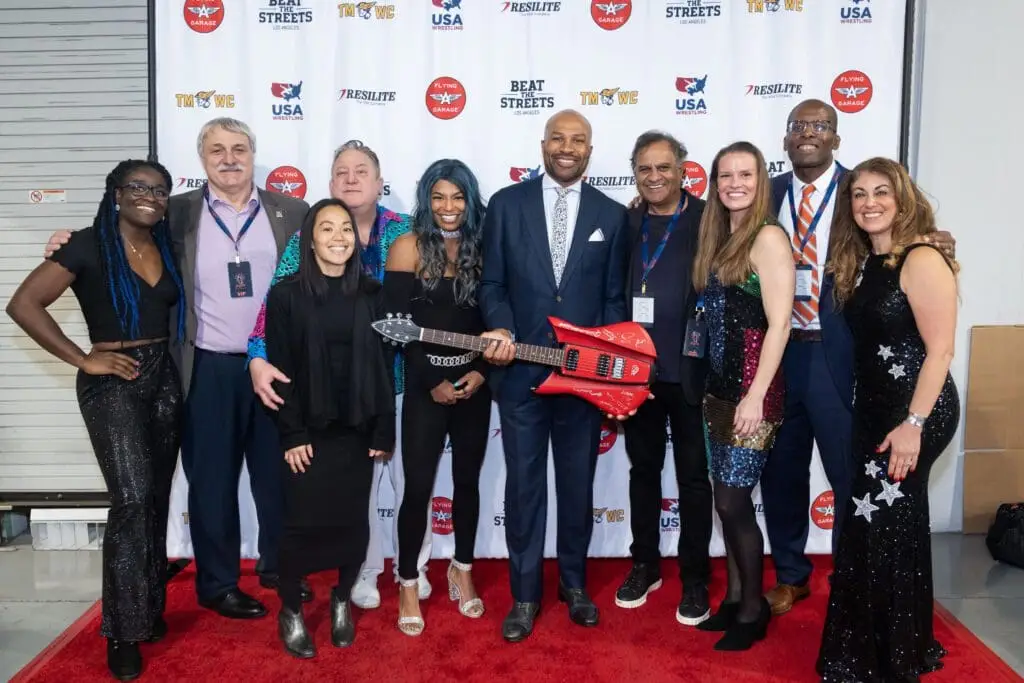
Ravi Sawhney and Athletes at BTS Charity Event

In the photo left to right, Tamyra Mensah-Stock Tokyo Olympic Gold, and the first Black woman to win gold in women’s wrestling. Bruce Baumgartner, 14-time World, and Olympic Champion carried the flag for the entire Team USA in opening ceremonies for the Atlanta Olympics and is now president of USA Wrestling. Clarissa Chun, World Champ & Olympic Bronze. Behind her is Royce Alger, World Silver. Jacarra Winchester, World Champion Wrestler. Sally Roberts, World Bronze Winner and current BTSLA board member. Kerry McKoy, World Silver Winner. Afsoon Johnston, World Bronze Winner, first American World Medal in women’s wresting, born in Iran and as a refugee. 

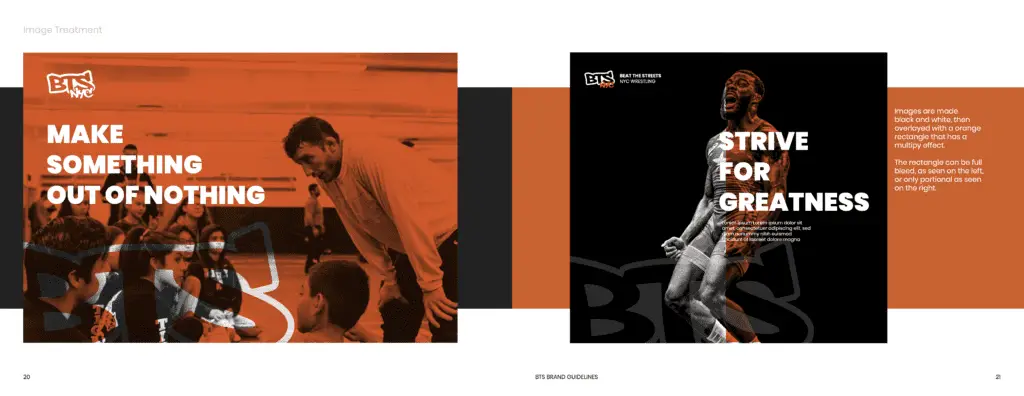
RKS worked with the Beat the Streets NY team to advance its brand identity and enhance its messaging. The team worked to enable the brand to continue to drive awareness and empower inner-city youth to focus their energy on wrestling and away from the streets. With their team, we worked to reposition and enhance their brand assets by creating a new logo, graphics, colors, and messaging. These brand guidelines were leveraged to develop and implement marketing campaigns, apparel, and event promotions. Being a non-profit, Beat the Streets NY wanted to ensure that it developed a brand that could connect with donors, children, and athletes to enable the organization to continue its mission. 
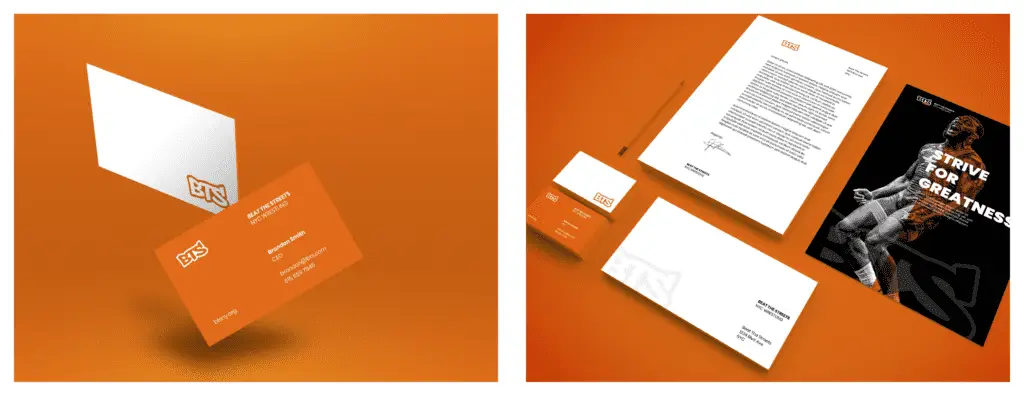
Beat the Streets branding renders of different items
Beat the Streets branding explanation

At its core, Beat the Streets LA is about much more than just wrestling. It’s about giving young people the opportunity to learn valuable life skills and develop the confidence and discipline they need to succeed in all aspects of life. Through its programs, the organization provides wrestling instruction, coaching, and mentorship to young people from underserved communities, helping them to not only become better wrestlers, but also better people.  

One of the key ways that Beat the Streets achieves its mission is through its wrestling programs. These programs are designed to provide young people with a safe and supportive environment in which they can learn the sport of wrestling and develop their skills. The organization’s coaches and mentors are highly trained and experienced, and they work closely with each wrestler to help them achieve their full potential.  
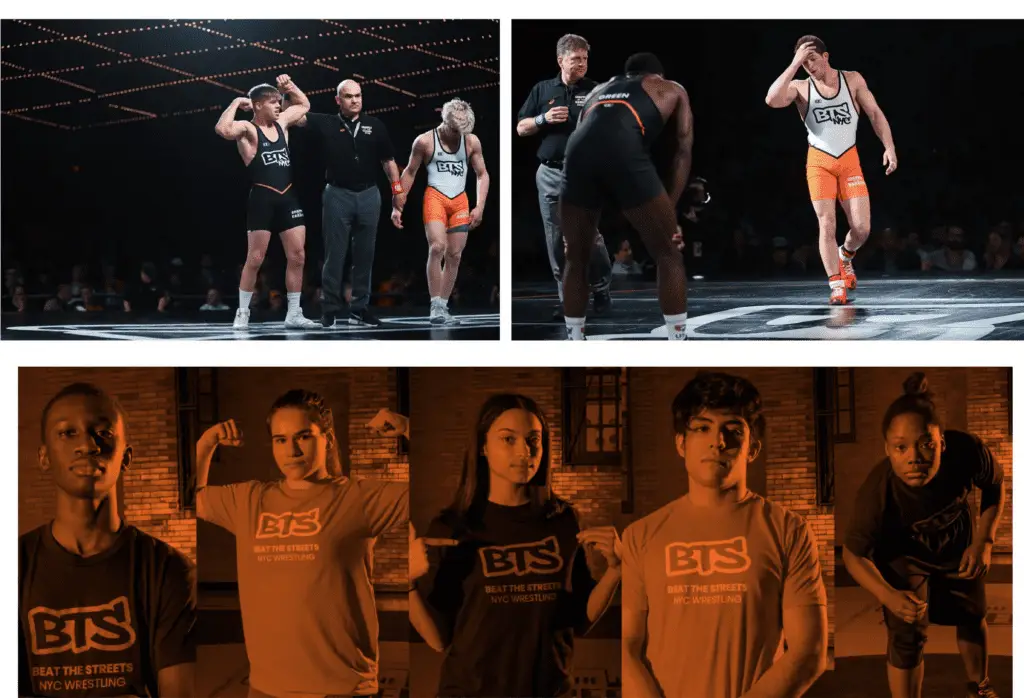
Beat the streets athletes wearing branding

 In addition to its wrestling programs, Beat the Streets also works to promote the sport of wrestling and raise awareness about its many benefits. Wrestling is a demanding and physically demanding sport, but it also teaches discipline, perseverance, and goal setting. These skills are invaluable for young people as they navigate the challenges of growing up and finding their place in the world.  

But perhaps the most powerful aspect of Beat the Streets is the way it brings people together. The organization’s programs bring together wrestlers from diverse backgrounds and communities, fostering a sense of camaraderie and mutual respect. This sense of community is an important part of what makes Beat the Streets special, and it’s something that many of the organization’s participants carry with them for the rest of their lives.  

Beat the Streets is an incredible organization that is doing important work to improve the lives of underserved youth through the sport of wrestling. Whether you’re a wrestler yourself or simply someone who believes in the power of sports to change lives, there are many ways you can get involved with Beat the Streets and help make a difference. Whether you volunteer your time, donate money, or simply spread the word about the organization and its mission, every little bit helps to support the important work that Beat the Streets is doing. 

You have signed up for the designer!

Welcome to a world of design and innovation

Your download has started!

If this is not the case, then click the button below to start it