RKS teaches Psycho Aesthetics® at UCLA Anderson

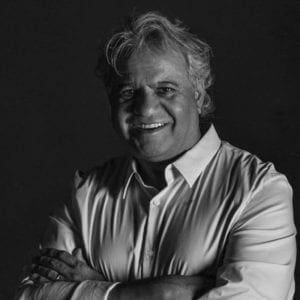
Picture of Ravi Sawhney

Ravi Sawhney

Founder, and CEO RKS Design

RKS Teaches Psycho Aesthetics® at UCLA Anderson

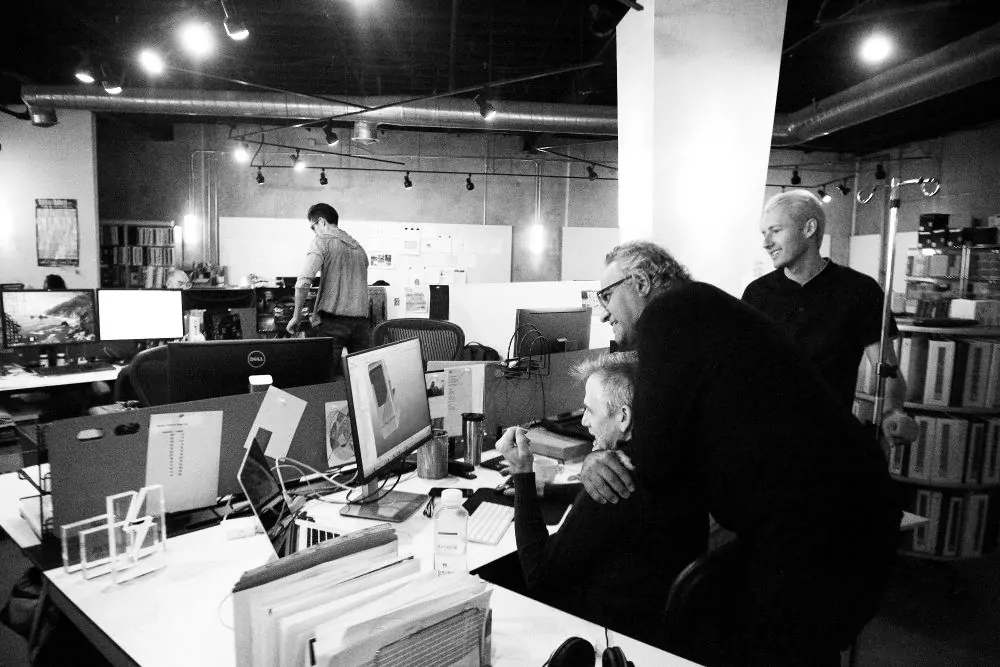
In October 2020, the RKS team visited MBA students at the UCLA Anderson School of Management to teach Psycho-Aesthetics (P/A), our advanced design-thinking methodology. This visit was part of a long-standing collaboration between RKS and Professor Andres Terech at the UCLA Anderson School of Management. Each quarter Professor Terech brings entrepreneurial MBA together for his New Product Development class, to show students how they can apply P/A to strategically find opportunity zones for new products in the market. In many cases, students take his course with a desire to start their own companies or become strategic leaders of their companies.

This year, RKS joined the class for three segments:

Introduction Class on Psycho Aesthetics with RKS Founder Ravi Sawhney

Workshopping 1 – Persona Development

Workshopping 2  – Mapping and Concept Development
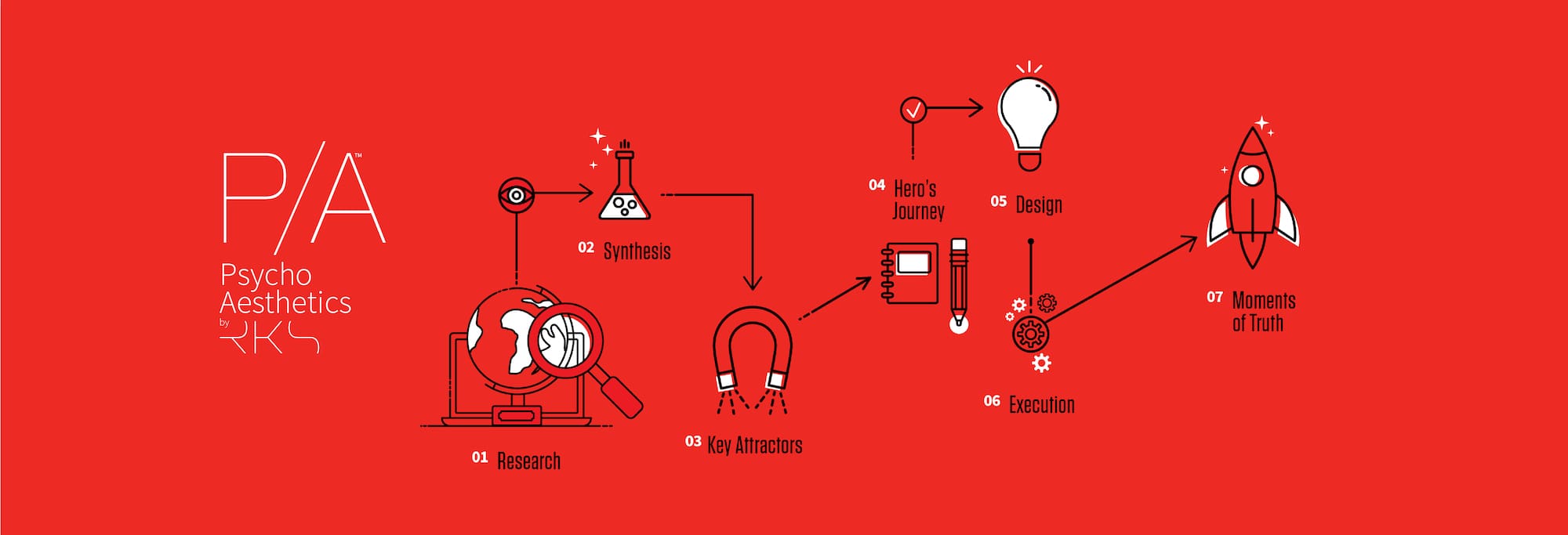
PA advanced design thinking framework banner image

Introductory Class on Psycho Aesthetics with RKS Founder Ravi Sawhney

The first class introduced students to the foundations of P/A. RKS Founder Ravi Sawhney, created P/A by combining his own understanding of humanity with the work of sociologist Joseph Campbell and psychologist Abraham Maslow. The result was a visual framework to understand how products meet human needs, where opportunities lie, and how products can become viral. Over time P/A has evolved to become a widely used tool for both the design-suite and the C-suite because of its easy-to-understand visual language.

During this first session, MBA students learned how to use P/A through a sample prompt. In groups, students were asked to design a new beach umbrella. Armed with P/A, students would spend the next weeks designed a new umbrella that would could be successful. The students began their projects by focusing on the first four steps of P/A: Research, Synthesis, Key Attractors, and the Hero’s Journey.

Workshop 1 – Persona Development and Competitive Benchmarking with RKS Team

In the first workshop, RKS team members Ben Azzam and Alex Levine reviewed students works and helped them fine-tune their personas and map the current product landscape with P/A. Persona development can be a combination of deep qualitative and quantitative research or based on archetypes or both. In this short-form setting, students in their groups of five relied primarily on their own knowledge of the world and the people in it, to articulate up to eight persons for whom they could design their products. Students then synthesized key understandings about each persona into “help me” statements. In Psycho-Aesthetics, “help me” statements allow the design team and all other stakeholders to empathize with the needs of your personas. Creating these P/A maps is usually a highly collaborative process. To help students experience this process, Ben and Alex met with students in small working groups, where they presented their personas and P/A Maps for feedback.

Workshop 2 – Early Concept Development with RKS Team

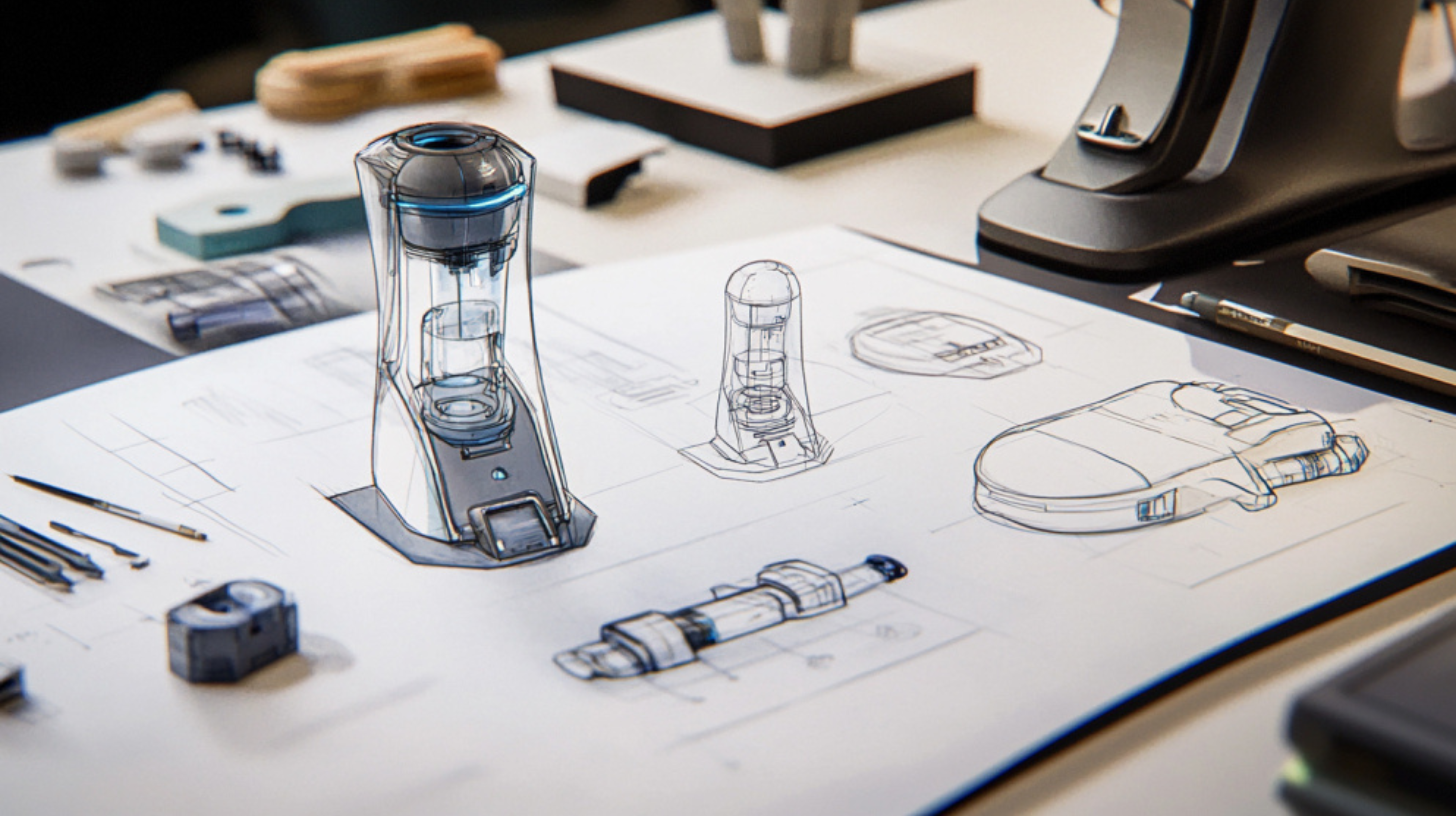
In the second workshop, Ben and Alex returned to help students refine their concepts. The constant theme in our meetings were to make sure their concepts answered the needs of their personas and were located in the opportunity zone of the market. P/A Maps provide a useful tool for non-designers to see what consumers want and need, and where existing offerings are not meeting those needs. By taking these insights from their P/A maps, students began to create concepts of new products. MBA students aren’t designers, but with the tools of P/A every group was able to propose a new product to meet their customer needs. Student then presented their new umbrellas to the class.

Final Project

The initial workshops set the stage for a larger project, which took place over the course of the semester, where the UCLA teams worked together on larger self-selected challenges to identify new market opportunities and solutions utilizing the Psycho-Aesthetics process.
more Thoughts & ideas

A collage shows people working on tactile art projects at the Holiday Ornament Workshop and a busy indoor event. In the center are the Momentum Innovative Disability Services logo and a red triangle in a circle, separated by an “x” symbol.

Creating Together

Our Holiday workshop at momentum Creating as a community To kick off the holiday season, we partnered with our new neighbors at Momentum, a nonprofit that has

A close-up of a futuristic circuit board with glowing lights, overlaid with the text: Designing the Future of Hard Tech. Insights from LA Tech Week 2025. Tech LA Week and a red logo appear in the corners.

Insights from LA Tech Week 2025

Designing the Future of HardTech Insights from LA Tech Week 2025 insights from la tech week hardtech panel Building, Scaling, & Funding HardTech Panel insights from RKS

A person interacts with a futuristic digital interface showing circular graphics. Text reads: “What We Learned from SoCalBio 2025: How AI Earns Its Place in Healthcare.” SoCalBio and another life sciences logo are visible.

What We Learned from SoCalBio 2025

How AI Earns ItsPlace in Healthcare What We Learned from SoCal Bio 2025 What we learned from socalbio 2025 How AI Earns Its Place in Healthcare Panel

About-RKS Product Design

About RKS

RKS is a design and innovation firm that creates solutions for clients that are relevant to the market, build the brand and create emotional connection. RKS services the full range of companies from funded startups to multinational corporations. Founder Ravi K. Sawhney cultivated a people-centric approach modeled from his work at Xerox PARC in the 1970’s, where innovative methods using psychology as an essential factor in design resulted in the first-generation touch screen graphic interface as well as many other breakthroughs. RKS came to national attention shortly after its founding by developing the production design of the animated Teddy Ruxpin, one of the greatest disruptive success stories in the history of the toy industry. Success followed success, with RKS being in on the ground floor of tablets with Alan Kay, Pocket Arcades with Sega and the game-changing dental whitening system for Discus Dental. Another milestone was the turnaround of MiniMed, developing a discreet personal insulin pump that allowed millions of diabetics to shed the stigma of being seen as “sick.” This inspired design took MiniMed from a declining $40M in revenue to $270M in three years, leading to its acquisition by Medtronic for $3.6B. The 1990’s brought a confluence of deep introspection and humanity, along with insights into how the work of Joseph Campbell and Abraham Maslow could inform design. This direction led to RKS Design’s highly acclaimed Psycho-Aesthetics methodology.
RKS Design Logo Product Design
Psycho Aesthetics at UCLA

RKS teaches Psycho Aesthetics® at UCLA Anderson

Picture of Ravi Sawhney

Ravi Sawhney

Founder, and CEO RKS Design

more thoughts and ideas

About-RKS Product Design

About RKS

RKS is a design and innovation firm that creates solutions for clients that are relevant to the market, build the brand and create emotional connection.

RKS services the full range of companies from funded startups to multinational corporations. Founder Ravi K. Sawhney cultivated a people-centric approach modeled from his work at Xerox PARC in the 1970’s, where innovative methods using psychology as an essential factor in design resulted in the first-generation touch screen graphic interface as well as many other breakthroughs.
RKS came to national attention shortly after its founding by developing the production design of the animated Teddy Ruxpin, one of the greatest disruptive success stories in the history of the toy industry. Success followed success, with RKS being in on the ground floor of tablets with Alan Kay, Pocket Arcades with Sega and the game-changing dental whitening system for Discus Dental. Another milestone was the turnaround of MiniMed, developing a discreet personal insulin pump that allowed millions of diabetics to shed the stigma of being seen as “sick.” This inspired design took MiniMed from a declining $40M in revenue to $270M in three years, leading to its acquisition by Medtronic for $3.6B.

The 1990’s brought a confluence of deep introspection and humanity, along with insights into how the work of Joseph Campbell and Abraham Maslow could inform design. This direction led to RKS Design’s highly acclaimed Psycho-Aesthetics methodology.

RKS Design Logo Product Design

You have signed up for the designer!

Welcome to a world of design and innovation

Your download has started!

If this is not the case, then click the button below to start it