A solid black circle with a white equilateral triangle centered inside it, pointing upward.
Following a recent media feature that included insights from our CEO & Founder, Ravi Sawhney, this perspective expands on the implications of automation in fast food and retail environments. As brands introduce self-service systems to increase efficiency, the underlying value exchange is shifting, with customers taking on more responsibility while expectations continue to rise.

This article explores why efficiency alone does not define a successful experience, how subtle changes in effort and interaction impact perception, and where trust begins to erode. It highlights the importance of designing not just for operational performance, but for human response, where adoption, satisfaction, and long-term value are ultimately determined.

When Automation Breaks the Experience: The Hidden Risk of Self-Service Design

The Shift Customers Feel Immediately

Automation isn’t the issue.

The issue is how it changes the experience.

A recent article featuring Ravi Sawhney highlighted a growing shift in fast food: customers are being asked to do more, while paying more.

At first glance, automation promises efficiency. Faster ordering. Shorter lines. Lower operational costs.

But that’s not how people evaluate experiences.

They evaluate value.

As Ravi noted, “What’s changing here is the value exchange. Customers are doing more of the work while paying more. People feel that immediately.”

The Shift Most Companies Miss

Most automation strategies are built around optimization, focusing on speed, throughput, and cost reduction. These are measurable and easy to justify from a business perspective, but they are not how customers actually experience a system.

Customers are not thinking about operational efficiency or evaluating labor models. Instead, they are asking a much simpler question:

Does this feel worth it?

That judgment is not analytical; it is instinctive. It is formed quickly based on how much effort is required, how clear the process feels, and how the interaction makes them feel overall.

When customers are asked to navigate more steps, make more decisions, or take on tasks that were previously handled for them, their perception of value begins to shift. This can happen even if the system is technically faster or more efficient.

Effort is not neutral. People feel it, and they factor it into how they evaluate an experience.

When effort increases without a corresponding increase in perceived value, something begins to break. Not at an operational level, but at an emotional one. That is where friction builds and trust starts to erode.

When Convenience Stops Feeling Convenient

There is a point where convenience crosses a line.

What once felt simple and intuitive begins to require more attention and effort. Ordering becomes navigating through screens and options. Speed becomes dependent on self-service. Ease shifts into responsibility.

Individually, these changes may seem minor. Together, they reshape how the experience is perceived.

At that point, the interaction no longer feels like a benefit. It starts to feel like work.

As Ravi explained, “At a certain point, convenience stops feeling convenient and starts feeling like responsibility.”

That shift is subtle, but it is critical. It marks the moment when customers begin to reassess the value of the experience, not based on efficiency, but on how it feels to engage with it.

This is where trust begins to erode, often without companies realizing it is happening.

Automation Without Meaning

Automation can make experiences faster, but speed alone does not determine whether an experience is better.

In some cases, automation removes the very elements that made the experience work in the first place. While those elements may seem small or inefficient from an operational perspective, they often carry meaning for the customer.

Human interaction is not just functional. It signals attention, care, and a sense of being understood. Even brief moments of interaction can reinforce trust and create a feeling of value that extends beyond the transaction itself.

When that layer is removed, something needs to replace it. The experience must still communicate clarity, ease, and a sense of consideration for the user.

If nothing replaces it, the interaction can begin to feel impersonal or incomplete. Even if it is technically faster, the experience lacks meaning, and efficiency alone is not enough to compensate for that loss.

The Real Design Challenge

The question is not whether to automate. Automation will continue to expand across industries, driven by efficiency, scale, and technological capability.

The real question is what is being replaced, and what is being added back.

Every element that is removed from an experience, whether it is human interaction, guidance, or a sense of ease, carries meaning for the customer. If that meaning is not intentionally replaced, the overall experience begins to degrade, even if the system itself is more advanced.

Companies that succeed will not be the ones that automate the most. They will be the ones that understand how the experience feels from the customer’s perspective and design accordingly.

Because adoption is not driven by capability alone. It is driven by perception, trust, and whether the experience feels valuable in the moment it is used.

Ready to Partner with Us?

[row] [col span="9" span__sm="12"]

40th Anniversary Celebration

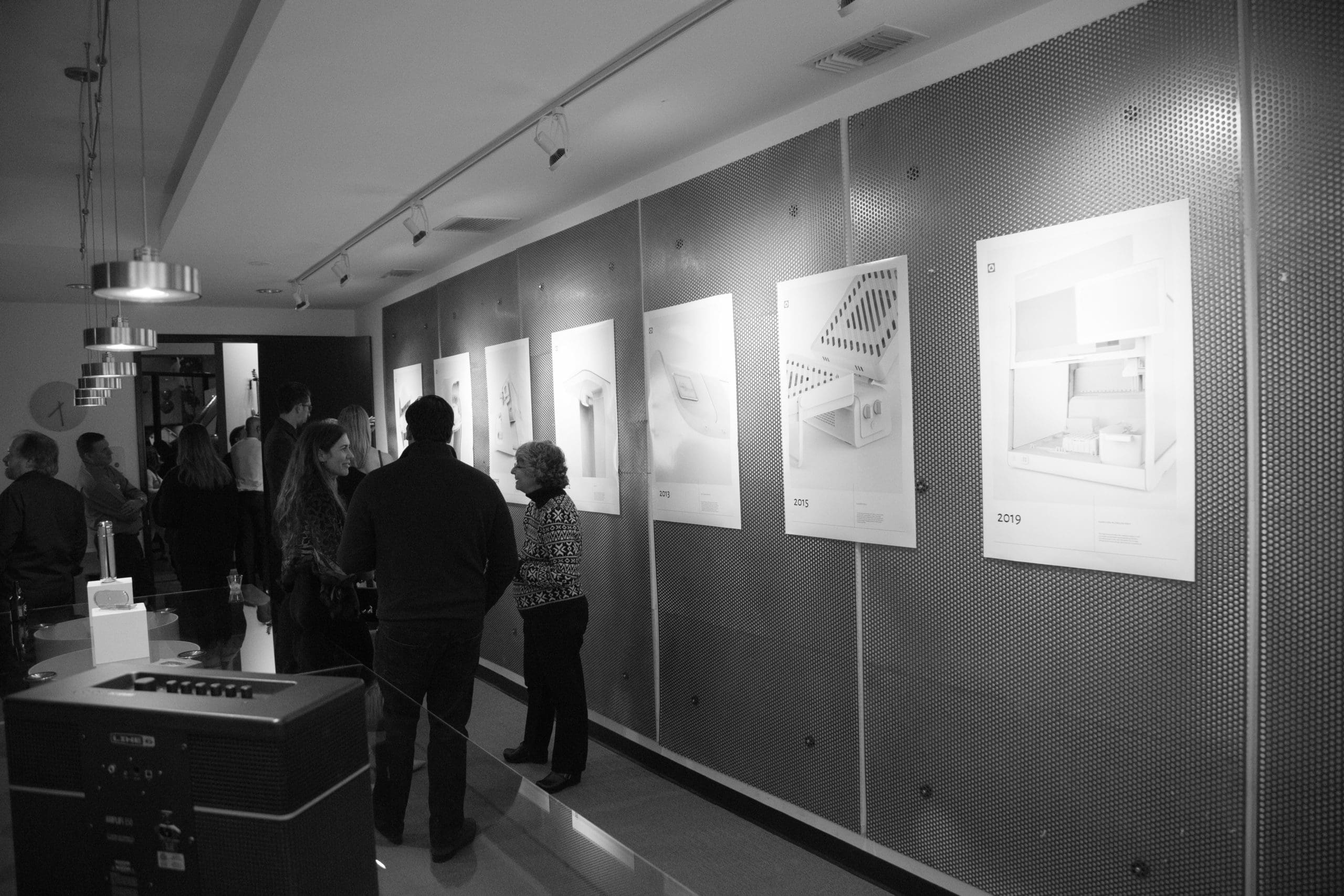
On January 20th, 2020, RKS celebrated 40 years of design and innovation with an Anniversary Celebration. We hosted an open invitation to our corporate office in Thousand Oaks, California, where guests could mingle with industry experts, enjoy tacos, and have a few crafted cocktails. The anniversary paid tribute to the past 40 years of RKS design and innovation.
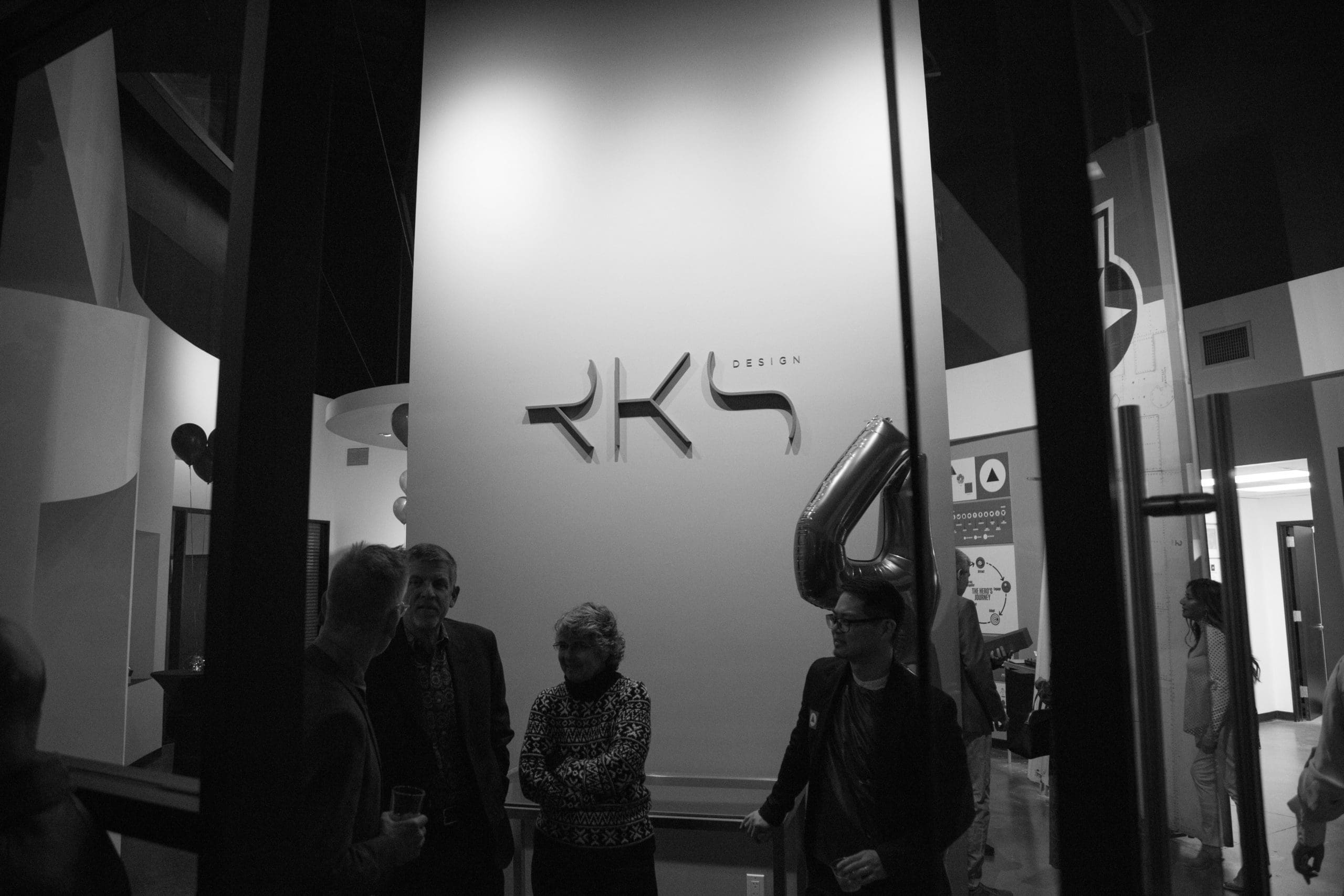
"Design is an ever-changing landscape in which the challenges and application to people’s lives have driven me day by day, for 40 years. I fell into design at an early age and have loved every minute of the thinking, strategy and creativity that has come from those who have collaborated with us over the decades- from our clients to our team members and to our dear friends and family who forever are so supportive." -Ravi Sawhney, Founder and CEO of RKS Design

Guests were invited to make a small donation to our chosen charity Start-Up kids. They are a non-profit organization that helps shape entrepreneurship of kids. We believe the future is about the kids and like to give back to them any way we can.

“The RKS 40th was a great celebration of the community it’s built. The huge turnout was a testament to the impact RKS has had with people around the globe. Products and Projects don’t design themselves, People do. I’ve known and worked with RKS design as a client on and off for 30+ years. I’ve developed meaningful relationships with the people at RKS, and they are best in class. In the end, it’s the People of RKS that have developed this truly fantastic community of design professionals. Congratulations all.”- David Zimberoff, VP of Marketing @ SRAM

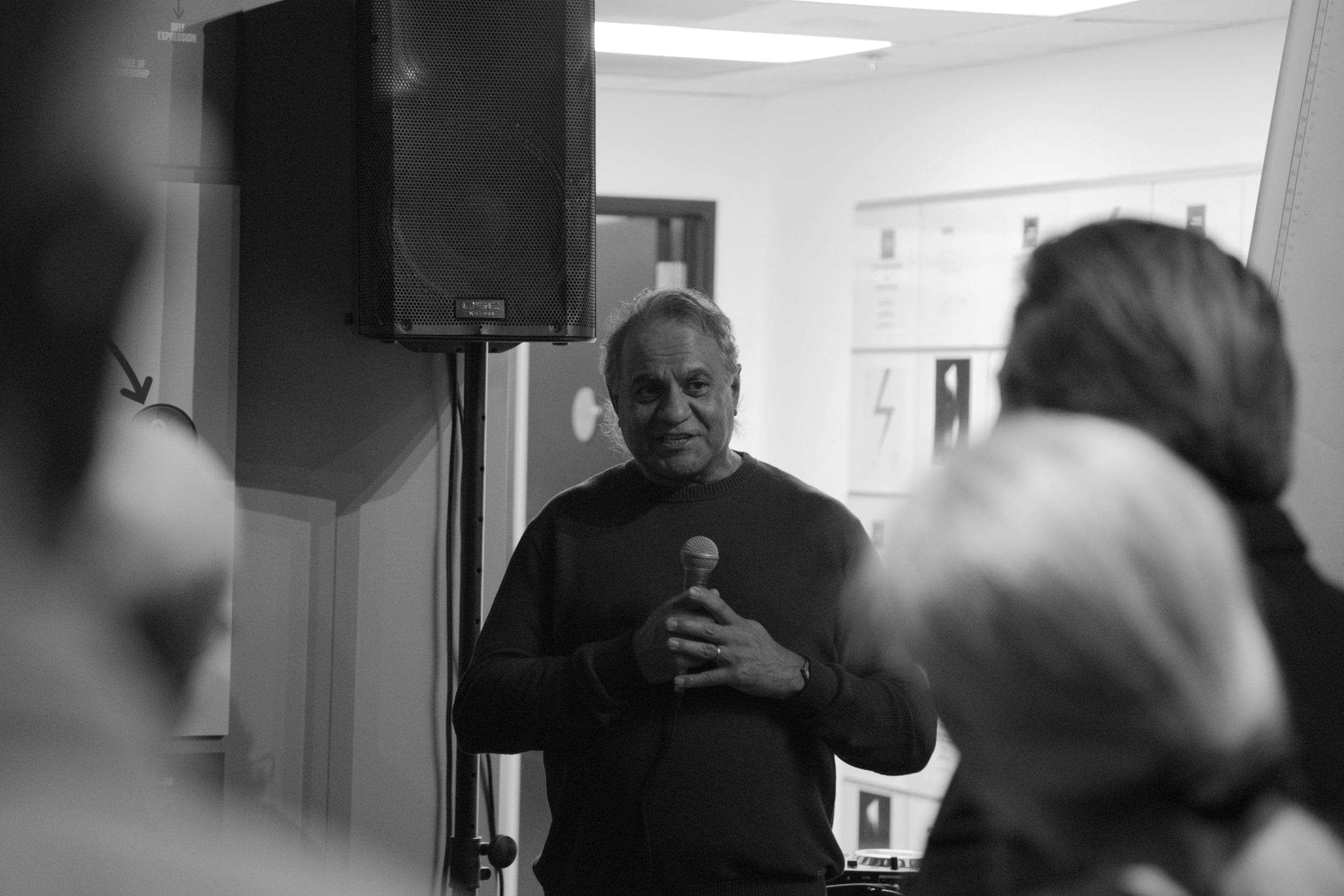
The anniversary party incorporated curated posters with images of projects, descriptions, and a handful of them to display to our guests. We paid tribute to our history from our Psycho Aesthetics Methodology with specialty cocktails like the Manhattan Maslow and Campbell Cosmopolitans. Guests were gifted Kor water bottles that featured our 40 design anniversary logo. Our CEO and Founder, Ravi, thanked everyone for coming, and a close friend and client, Dave Deslter recited a speech he wrote about RKS Design.

Two score and no additional years ago, Ravi Sawhney brought forth to this nation the preposterous notion that he alone knew better how everything should look, function, and make you feel about yourself.

To him, most design was just a mess,
So he started RKS.
From a room at home to this grand place,
He never slowed the pace.

This humble servant of design,
His teachers judged benign.
Conceived new toys, a water jar,
A new look for the electric guitar.

He built a firm that had few peers,
That thrived throughout the years.
Employing the very finest minds
In engineering and design.

With his Amalia by his side,
RKS would not be denied,
From strength to strength to strength it grew,
Creating amazing things anew.

And despite so much success,
In solving that perceived mess.
Our friend Ravi remains today,
As humble as ever…wouldn’t you say?

Congratulations on 40 years!
Love,~ Dave Destler President at Destler Business Developments, LLC
Jan. 11, 2020

We want to thank everyone who came out to celebrate our 40th-Anniversary Celebration with us! We hope everyone had a great time and we can't wait to see you in another 40!


“It was fantastic to be invited to, and attend this celebration. I can’t believe that I’ve had the pleasure of working with the RKS team for over half of the 40 years in question.Each experience has brought a tremendous experience and added a new dimension to my own industry contributions and personal growth. Happy 40!”- Simon Jones VP of Marketing @ Yamaha Guitar Group
 

[/col] [col span="3" span__sm="12"] [ux_image id="4026"] [ux_image id="4034"] [ux_image id="4091"] [/col] [/row]

You have signed up for the designer!

Welcome to a world of design and innovation

Your download has started!

If this is not the case, then click the button below to start it