A solid black circle with a white equilateral triangle centered inside it, pointing upward.
Following a recent media feature that included insights from our CEO & Founder, Ravi Sawhney, this perspective expands on the implications of automation in fast food and retail environments. As brands introduce self-service systems to increase efficiency, the underlying value exchange is shifting, with customers taking on more responsibility while expectations continue to rise.

This article explores why efficiency alone does not define a successful experience, how subtle changes in effort and interaction impact perception, and where trust begins to erode. It highlights the importance of designing not just for operational performance, but for human response, where adoption, satisfaction, and long-term value are ultimately determined.

When Automation Breaks the Experience: The Hidden Risk of Self-Service Design

The Shift Customers Feel Immediately

Automation isn’t the issue.

The issue is how it changes the experience.

A recent article featuring Ravi Sawhney highlighted a growing shift in fast food: customers are being asked to do more, while paying more.

At first glance, automation promises efficiency. Faster ordering. Shorter lines. Lower operational costs.

But that’s not how people evaluate experiences.

They evaluate value.

As Ravi noted, “What’s changing here is the value exchange. Customers are doing more of the work while paying more. People feel that immediately.”

The Shift Most Companies Miss

Most automation strategies are built around optimization, focusing on speed, throughput, and cost reduction. These are measurable and easy to justify from a business perspective, but they are not how customers actually experience a system.

Customers are not thinking about operational efficiency or evaluating labor models. Instead, they are asking a much simpler question:

Does this feel worth it?

That judgment is not analytical; it is instinctive. It is formed quickly based on how much effort is required, how clear the process feels, and how the interaction makes them feel overall.

When customers are asked to navigate more steps, make more decisions, or take on tasks that were previously handled for them, their perception of value begins to shift. This can happen even if the system is technically faster or more efficient.

Effort is not neutral. People feel it, and they factor it into how they evaluate an experience.

When effort increases without a corresponding increase in perceived value, something begins to break. Not at an operational level, but at an emotional one. That is where friction builds and trust starts to erode.

When Convenience Stops Feeling Convenient

There is a point where convenience crosses a line.

What once felt simple and intuitive begins to require more attention and effort. Ordering becomes navigating through screens and options. Speed becomes dependent on self-service. Ease shifts into responsibility.

Individually, these changes may seem minor. Together, they reshape how the experience is perceived.

At that point, the interaction no longer feels like a benefit. It starts to feel like work.

As Ravi explained, “At a certain point, convenience stops feeling convenient and starts feeling like responsibility.”

That shift is subtle, but it is critical. It marks the moment when customers begin to reassess the value of the experience, not based on efficiency, but on how it feels to engage with it.

This is where trust begins to erode, often without companies realizing it is happening.

Automation Without Meaning

Automation can make experiences faster, but speed alone does not determine whether an experience is better.

In some cases, automation removes the very elements that made the experience work in the first place. While those elements may seem small or inefficient from an operational perspective, they often carry meaning for the customer.

Human interaction is not just functional. It signals attention, care, and a sense of being understood. Even brief moments of interaction can reinforce trust and create a feeling of value that extends beyond the transaction itself.

When that layer is removed, something needs to replace it. The experience must still communicate clarity, ease, and a sense of consideration for the user.

If nothing replaces it, the interaction can begin to feel impersonal or incomplete. Even if it is technically faster, the experience lacks meaning, and efficiency alone is not enough to compensate for that loss.

The Real Design Challenge

The question is not whether to automate. Automation will continue to expand across industries, driven by efficiency, scale, and technological capability.

The real question is what is being replaced, and what is being added back.

Every element that is removed from an experience, whether it is human interaction, guidance, or a sense of ease, carries meaning for the customer. If that meaning is not intentionally replaced, the overall experience begins to degrade, even if the system itself is more advanced.

Companies that succeed will not be the ones that automate the most. They will be the ones that understand how the experience feels from the customer’s perspective and design accordingly.

Because adoption is not driven by capability alone. It is driven by perception, trust, and whether the experience feels valuable in the moment it is used.

Ready to Partner with Us?

RKS Hires world-class teammember

Published on Oct 28th, 2015

RKS has acquired its latest strategic hire as the firm continues to excel in innovation, strategy, and design. Mike Elam, the newest addition to the world class RKS team, takes on the role of Director of Product Development. This position encompasses innovation, interaction, design, design for manufacturing and prototyping in conjunction with external resources and vendors and the in house team of RKS experts.
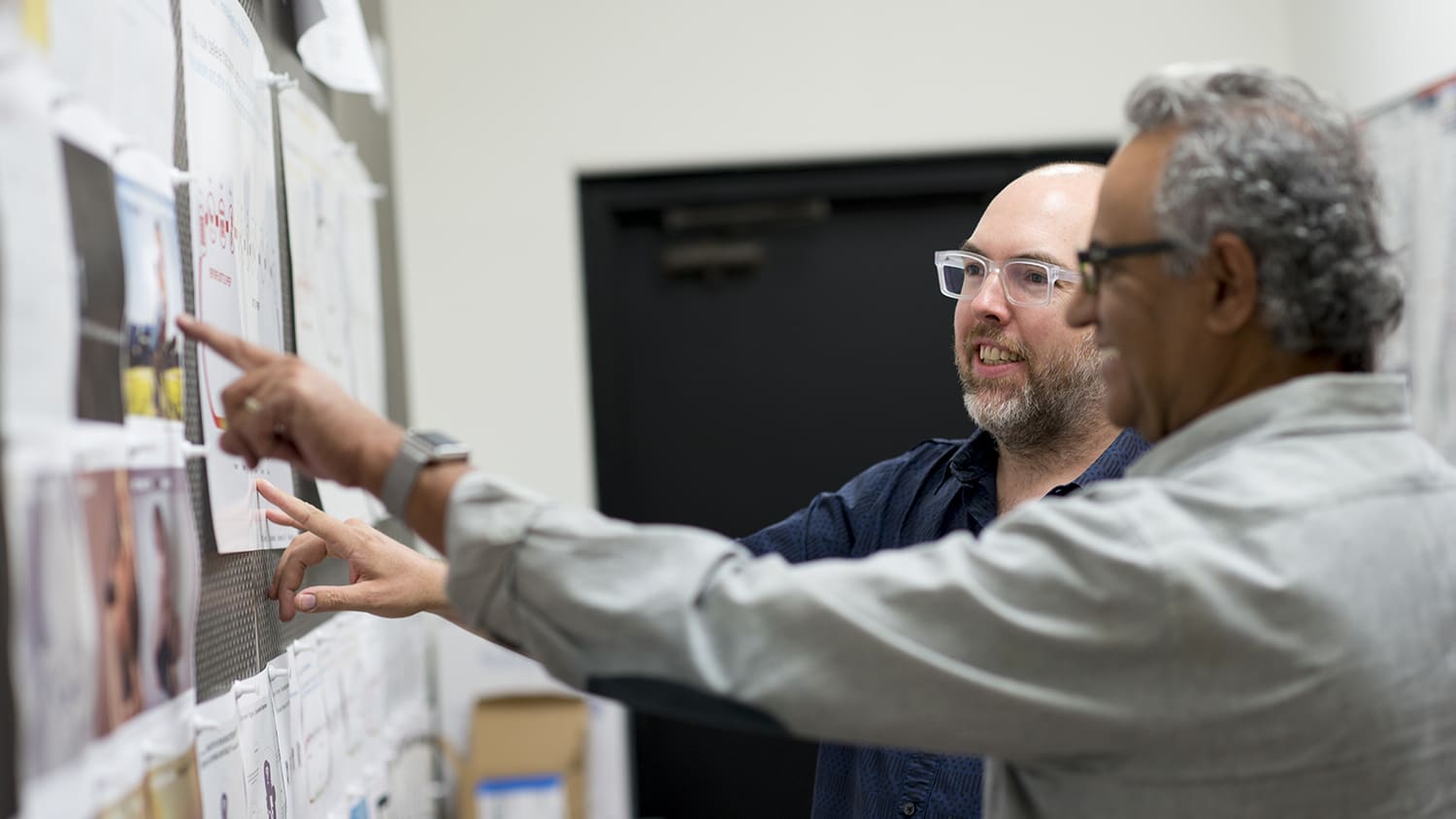
Mike has a very unique and proven successful skillset as a usability expert as well as an engineer and designer.  Mike designs physical interactions with products that feel fantastic by engineering from a usability standpoint. Mike’s very special design through intuition is invaluable to the projects innovated at RKS. This intuitive problem solving technique helps him to see barriers from a foreign perspective and to ultimately create ingenious solutions quickly. RKS CEO Ravi Sawhney elaborates, “He’s brilliant, collaborative and has the unique ability to conceive of mechanisms, haptic, innovations and trigger vast improvement in all he sees and touches.”

Along with his positive and playful personality, Mike brings 23 years of experience in product development to RKS. Mike studied furniture and product development at Ravensbourne, a world-class design and digital media college in London. Mike recently moved to the United States from the UK where he owned and ran his own design firm, Hyphen. Hyphen was hugely successful at creating cost effective solutions through innovation, engineering, and user experience.

At Hyphen, Mike has created many very impressive products. The team designed a gorgeous mobile configuration case for McLaren supercars. The case is designed as a luxurious way for elite car customers to pick customizations in paint, fabric, upholstery stitching, wheel color, and brake caliper color for their McLarens. Mike also designed some of the most comfortable swimming goggles on the market for Speedo. These goggles were highly successful as they dominated the sales space for an unusually long shelf life of 6 years.The goggles were designed with the user’s experience as a first priority while making specialized modifications for optimal comfort and user experience.

Mile and Ravi workshoping and designing

In addition to these big name projects, some of Mike’s most recent work at Hyphen has been aimed specifically to aid in underdeveloped countries. An all new card payment system in Pakistan, an affordable heating pad for babies in Rwanda, and a vaccine refrigerator for the developing world are just some of the world changing solutions he has created. Mike has thoroughly enjoyed these projects because he has had the opportunity to solve very real problems and bring useful, affordable technology to those who truly need it.

Mike’s philanthropic motivations fit in perfectly at RKS as we have decades of involvement in projects aimed specifically to bring assistance to those in need. Ravi Sawhney especially relates to Mike’s dedication to humanitarianism, “he aligns with our vision for design’s roles in helping as many people as there are in this world.” The RKS team is very excited about working with Mike and getting involved in the philanthropic projects he brings with him.

“He aligns with our vision for design’s roles in helping as many people as there are in this world”
You have signed up for the designer!

Welcome to a world of design and innovation

Your download has started!

If this is not the case, then click the button below to start it